Why Fiber Matters on a Low Carb Diet
Understanding Soluble and Insoluble Fiber
Most South Africans eat barely half the recommended fiber, roughly 15 grams daily. Cutting carbs worsens this, since grains and legumes vanish. But low carb foods high in fiber exist, and they are not obscure. Your local grocer has them!
Fiber slows digestion, steadies blood sugar, and keeps you full. On a low carb diet, this prevents the dreaded afternoon slump.
Understanding soluble and insoluble fiber guides your choices. Soluble fiber dissolves in water, forming a gel that feeds gut bacteria. Insoluble fiber adds bulk to stool and accelerates transit. Both are essential.
- Soluble: avocado, chia seeds, Brussels sprouts
- Insoluble: celery, green beans, pecans
How Fiber Supports Blood Sugar Regulation
When you slash carbohydrates, glucose no longer arrives in heavy waves. But the absence of grains can leave you feeling unsteady, unless you seek out low carb foods high in fiber. These foods act like a subtle brake on digestion. A meal with avocado or chia seeds releases sugar into the bloodstream slowly, which prevents the frantic spike-and-drop cycle.
The effect on metabolic control is direct:
- Fiber increases the time food spends in your stomach.
- It reduces the total glucose absorbed from a meal.
- It signals satiety to your brain, which curbs impulsive snacking.
I have seen patients struggle with brittle energy, and the fix was rarely more complex than adjusting their vegetable selection. The plate matters more than the calorie count.
The Gut Microbiome Connection
Beneath every meal lies a colony of microorganisms that outnumber our own cells. They care only about what we feed them. When carbohydrates vanish from the plate, the microbiome enters a kind of famine. The gut lining thins. Inflammation creeps in. Low carb foods high in fiber offer a lifeline, for fiber is the fuel they crave.
It is fermentation, a slow digestion deep in the colon. Bacteria break down fiber and release short chain fatty acids, which nourish the cells lining your gut. I find this process alchemical. A diet rich in these foods quiets the gut and changes which bacterial species thrive. Consider what shifts.
- Beneficial bacteria multiply, crowding out harmful strains.
- The intestinal barrier tightens, keeping particles out of the bloodstream.
- Gut signals travel to the brain, influencing mood and hunger.
Without fiber, the gut weakens. With low carb foods high in fiber, the colony flourishes!
Setting Realistic Daily Fiber Goals
Most people on a restrictive diet measure what they remove, not what they retain. When carbohydrates shrink, fiber often shrinks with them. Meals lose their physical weight, digestion slows, and hunger returns sooner than it should. Fiber supplies the bulk that makes a meal feel complete. I find that people rarely quit a low carb diet because they miss bread; they quit because they never replaced the fullness.
Setting realistic daily fiber goals begins with accepting your own constraints. The conventional target of 25 to 30 grams assumes a broad intake of grains. On a low carb foods high in fiber approach, those sources disappear. Your needs depend on factors you can actually name:
- your daily carbohydrate ceiling
- your vegetable intake at each meal
- your tolerance for legumes and seeds
The number responds to your body, not to a general chart. A steady supply of low carb foods high in fiber matters more than a perfect score.
Top Vegetables and Greens for a Fiber Boost
Leafy Greens That Go Beyond Lettuce
One cup of cooked Swiss chard delivers four grams of fiber with just one gram of net carbs. That is a rare ratio for anyone hunting low carb foods high in fiber. Leafy greens remain underused in this category.
Spinach, kale, and watercress outperform head lettuce by a wide margin. They carry more minerals and a deeper earthy flavor. Consider these rugged options:
- Kale: 3.6 grams per 100 gram serving
- Morogo: an indigenous South African green with 4.2 grams
- Pumpkin leaves: tender and versatile
These greens can be wilted into stews or sautéed with olive oil. Their fibrous leaves hold up to heat, adding bulk without breaking your carb allowance. Iceberg lettuce holds little fiber. These deep colored options provide more.
Cruciferous Vegetables and Their Carb Trade-Offs
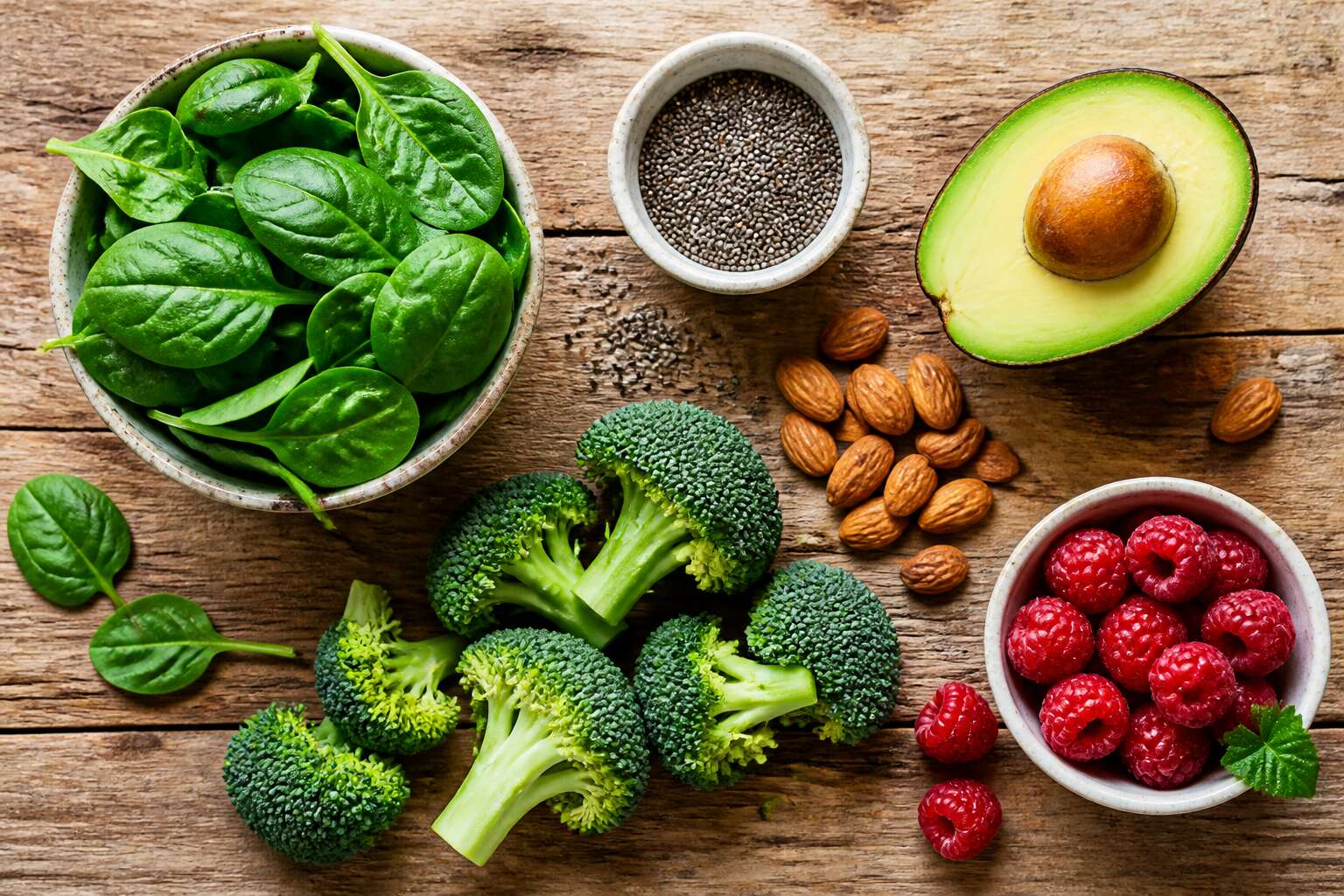
Cruciferous vegetables are the overachievers of the low carb foods high in fiber category. Broccoli and Brussels sprouts pack serious fiber without the carb load. A cup of cooked broccoli delivers around 5 grams of fiber for roughly 4 grams of net carbs. That is a bargain. Cauliflower gets all the attention as a rice substitute, but its fiber content is modest compared to its cousins. For a genuine fiber boost, reach for:
– Broccoli: 2.4 grams of fiber per 100 grams
– Brussels sprouts: 3.8 grams per 100 grams
– Cabbage: 2.5 grams per 100 grams
The carb trade-off is reasonable. These vegetables keep your daily carb count low while moving the needle on fiber intake. Cabbage, often overlooked, holds its own with a solid fiber ratio and a long shelf life. If you are hunting low carb foods high in fiber, cruciferous options deserve a permanent spot on your plate. They roast well, they steam quickly, and they hold up in soups without turning to mush.
Avocados: A Fiber-Rich Superstar
Avocados defy the low carb stereotype. A whole medium fruit delivers roughly 10 grams of fiber while keeping net carbs near 2 grams. That makes them a cornerstone of any low carb foods high in fiber strategy! I slice them into salads, mash them onto seed crackers, or eat them straight with a spoon. The creamy texture hides a fibrous matrix that supports digestion without spiking glucose.
Beyond avocados, other greens deserve attention. Consider these options:
- Artichoke hearts: 5 grams of fiber per half cup, with minimal carbs.
- Okra: 3 grams per cup, cooked, plus a pleasant thickening quality.
- Asparagus: 2 grams per 100 grams, ideal for grilling.
Each vegetable adds texture and bulk to meals, proving that low carb foods high in fiber come in many forms. The key is variety, not monotony.
Nuts and Seeds: Small But Mighty Fiber Sources
Chia Seeds and Flaxseeds for Gel-Forming Fiber
Chia seeds absorb up to 12 times their weight in water, forming a gel. Flaxseeds do the same, though they need a good stir. Both are low carb foods high in fiber, with about 4 grams of fiber per tablespoon and roughly 2 grams of net carbs.
This gel-forming fiber slows digestion and keeps you fuller for longer. It also adds volume to your stool, which is a direct benefit of soluble fiber. In South Africa, you often find these seeds in health stores. Add a spoonful to yoghurt or a smoothie. Drink enough water, or you might feel a heavy lump in your stomach.
Here is the fiber content:
- Chia seeds: 5.4 grams of fiber per ounce
- Flaxseeds: 3.8 grams of fiber per ounce
Almonds, Walnuts, and Pecans: Serving Sizes Matter
Sometimes the smallest treasures hide the most surprising fiber. Almonds, walnuts, and pecans pack a mighty punch for anyone hunting low carb foods high in fiber. A single 28 gram serving of almonds delivers 3.5 grams of fiber with only 2.6 grams of net carbs. That same careful portion of walnuts offers 2 grams of fiber. Pecans follow closely, bringing 2.7 grams while keeping net carbs to a mere 1.3 grams.
Serving sizes truly dictate your carb budget. Overindulging transforms a smart snack into a calorie avalanche.
Here is the fiber content per 28 gram serving:
- Almonds: 3.5 grams fiber
- Walnuts: 2 grams fiber
- Pecans: 2.7 grams fiber
I reach for these crunchy gems when I need a steady snack. Their texture satisfies, yet the portions demand respect. In South African stores, you will find them raw or roasted. Check labels for added oils. A mindful handful keeps you on track for low carb foods high in fiber without derailing your day.
Pumpkin Seeds and Sunflower Seeds: Nutrient-Dense Options
Pumpkin seeds and sunflower seeds sit neglected at the back of the snack shelf, overlooked yet stubbornly useful. Their fiber numbers hold steady against their carbohydrate cost. A 28 gram serving of pumpkin seeds provides 1.7 grams of fiber. Sunflower seeds, shelled, provide 3 grams per 30 gram portion. Together they bolster daily totals for anyone seeking low carb foods high in fiber.
- Pumpkin seeds: 1.7 grams fiber per 28 grams
- Sunflower seeds: 3 grams fiber per 30 grams
The shells impose a rhythm. Cracking them slows the hand and extends the meal. That restraint keeps the carbohydrate budget intact. South African shelves hold raw kernels, dry roasted packets, and salted mixes. The plain versions offer the highest fiber return.
How to Toast and Season Seeds for Everyday Meals
Most of the fiber in your pantry sits in tiny packages. Sesame seeds deliver over a gram of fiber per tablespoon, and hemp hearts match that with a bonus of protein. For anyone tracking low carb foods high in fiber, these small additions keep the carbohydrate ledger clean.
Toasting changes how they behave. I heat a dry pan, toss the seeds in, and shake for three minutes. A brown surface and a nutty smell tell you they are ready. Let them cool completely.
Seasoning sticks to the warm oils. Try one of these combinations:
- Smoked paprika and ground coriander
- Chili flakes and lime zest
- Cinnamon and unsweetened cocoa
Even a teaspoon scattered over a salad or stirred into yogurt moves the daily numbers. That is how seeds earn their place!
Low Carb Fruits Worth the Net Carbs
Raspberries and Blackberries: The Berry Champions
While seeds offer concentrated nutrition, raspberries and blackberries show fruits can fit a low carb high fiber approach. A cup of raspberries holds 8 grams of fiber and just 7 net carbs, placing them among the most efficient low carb foods high in fiber. Blackberries close behind with 7.6 grams and 6 net carbs per cup, a dependable choice for watching carbs.
The seeds inside these berries add texture and crunch, while the deep purple hue signals anthocyanins. Unlike apples or bananas, raspberries and blackberries deliver this fiber without a heavy sugar load. I find their tartness refreshing, especially when fresh berries appear in South African markets during summer.
- Raspberry: 7 net carbs, 8 grams fiber per 100 grams
- Blackberry: 6 net carbs, 7.6 grams fiber per 100 grams
This fiber-to-carb ratio exceeds that of most fruits.
Strawberries and Blueberries in Controlled Portions
Strawberries and blueberries serve as practical additions to a low carb menu, but they need portion control. A cup of sliced strawberries delivers 2 grams of fiber and 8 net carbs. Blueberries bring 3.6 grams of fiber per cup, yet 17 net carbs, which explains why a smaller serving keeps them among low carb foods high in fiber. I weigh or measure berries to avoid accidental overeating.
- Half a cup of blueberries (8.5 net carbs)
- One cup of strawberries (8 net carbs)
- A mix of both, one third cup each (about 9 net carbs)
South African shoppers find fresh berries in summer, while frozen berries retain fiber throughout the year.
Coconut and Its Surprising Fiber Content
One hundred grams of fresh coconut meat carries about 9 grams of fibre, which makes it a standout among fruits. Its net carb count stays manageable because the fibre fills much of the carbohydrate load. I place coconut firmly on my list of low carb foods high in fiber options.
Unsweetened shredded coconut works for quick meals. I sprinkle it into plain yoghurt or fold it into a stir fry. The key is measuring, since coconut brings calories too.
- 30 grams of fresh coconut yields roughly 2.7 grams of fibre.
- Two tablespoons of shredded coconut give about 3 grams of fibre.
Lemons and limes also justify their net carbs. Their juice and zest add flavour without wrecking a macro plan, and a small kiwi offers a modest fibre boost when I want variety.
Creative Ways to Add Fiber Without the Carbs
Swapping High Carb Sides for Fiber-Rich Alternatives
National nutrition surveys suggest South Africans average 14 grams of fibre daily, roughly half the recommended intake. Swapping high carb sides for fiber-rich alternatives is the quietest adjustment you can make to your plate.
In my kitchen, konjac noodles made from glucomannan replace spaghetti without a sound. Celeriac mash stands in for potatoes with twice the fibre and a fraction of the starch! These are low carb foods high in fiber that adapt to familiar meals.
Some swaps outperform others:
- Lupin flakes folded into mince stretch a meal and deliver 11 grams of fibre per 100 grams
- Psyllium husk whisked into stews thickens without a single spoon of flour
- Shaved fennel scattered over a protein bowl adds crunch and gentle anise
Each substitution keeps dinner recognisable while steadily raising your daily fibre count.
Using Low Carb Flours and Baking Boosts
Baking can undo a day of careful eating, but low carb flours shift the outcome. Almond flour contributes about 10 grams of fibre per 100 grams, and coconut flour reaches 38 grams, though it demands extra eggs. These are low carb foods high in fiber that reward patience. In my kitchen, I keep a jar of psyllium husk powder for bread, as it binds dough while adding soluble fibre without starch.
Substitute a fraction of wheat flour in any recipe with one of these boosts:
- Ground flaxseed for a nutty flavour and gel-forming fibre
- Lupin flour for an extra protein hit and 11 grams of fibre per 100 grams
- Finely milled oat fibre for bulk without carbohydrates
Start with a quarter replacement and adjust liquids. The texture changes, but the fibre gain is immediate.
Quick Snack Pairings That Hit the Fiber Target
Simplicity often wins in the kitchen. Afternoon hunger calls for quick snacks that respect your carb budget. Reach for jicama sticks or kohlrabi slices, both crisp and mildly sweet. Pair them with a spoonful of full fat Greek yogurt mixed with dried dill and a pinch of salt. This combination brings a satisfying snap without the starchy heaviness of chips. These low carb foods high in fiber work because they pair moisture with crunch, making a small portion feel substantial.
Another easy idea involves roasted seaweed sheets. Smear a little herbed soft cheese across a sheet, layer with thin strips of celery and a few hemp hearts, then roll into a tight cigar. The seaweed adds a mineral note while the celery provides texture. You can also stuff small bell pepper quarters with a mixture of mashed tofu and chopped olives. Each of these snacks hits the fiber target through whole ingredients, not powders.
Reading Nutrition Labels: Net Carbs vs. Total Carbs
Nutrition labels reward careful reading. Total carbs include everything: sugars, starches, and fiber. Net carbs subtract the fiber, because your body does not digest it the same way. For those seeking low carb foods high in fiber, this difference matters. A wrapper may list 12 grams of total carbs yet only 4 grams of net carbs when fiber accounts for the rest.
South African shoppers face imported and local brands with different labeling standards. Some packages display net carbs prominently, while others bury the fiber content among fine print. Reading both figures changes how you evaluate a product. Common markers of fiber density include:
- Fiber content above 5 grams per serving
- Total carbs that drop meaningfully after subtracting fiber
- Ingredients like chicory root or inulin that add fiber without starch
Products with such labels often belong to the category of low carb foods high in fiber.
Meal Prep Strategies for Sustained Fiber Intake
Boiling a pot of green beans on a Sunday evening fills the kitchen with a familiar warmth. I portion it into glass jars, ready for quick weekday meals. These low carb foods high in fiber keep well, and the flavor deepens overnight. For lunches, I make egg muffins with chopped spinach and feta, baked in silicone trays. They slide into a backpack without fuss!
Another approach is to treat fiber as an ingredient rather than an afterthought. I grind hemp seeds into a coarse meal and press it onto chicken before roasting. The crust adds texture without starch. At the local market, I look for okra and aubergine, both generous with fiber and gentle on carb budgets. I stew a large batch and freeze single portions. When the week turns busy, meal prep means these low carb foods high in fiber are always within reach, ready to warm up.
Hydration and Digestive Transition Tips
In Johannesburg’s dry winters, hydration requires constant attention. Without enough water, low carb foods high in fiber can cause bloating rather than relief. I learned this after adding flaxseed meal to my morning coffee, a mistake I corrected with a larger water bottle.
To ease the shift, I drink a full glass of water before each meal. This simple habit prepares the digestive tract for the extra bulk. Over time, the body adjusts and discomfort fades.
- Mix chia gel into warm soups.
- Soak flaxseeds overnight for softer texture.
- Steam cruciferous vegetables before eating.
Each choice reduces strain on the gut while preserving the benefits of fiber. The goal is a slow, gentle adaptation.




0 Comments