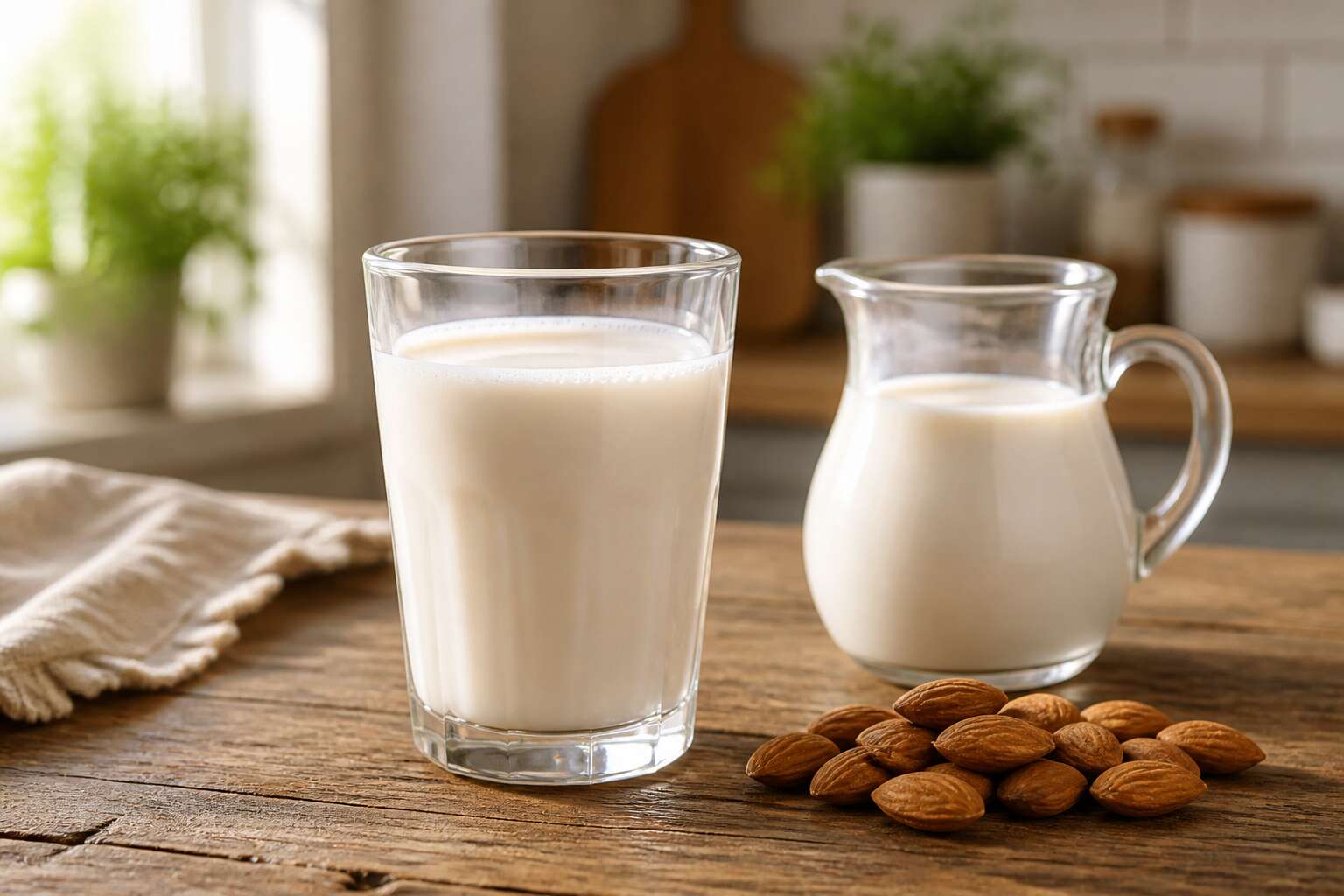
The Carb Content of Traditional Dairy
Why Diets Focus on Carbohydrates in Milk
Traditional cow’s milk carries roughly 12 grams of lactose per cup. That single carbohydrate is the reason many eating plans scrutinise dairy so closely. Lactose is a sugar, and sugars move blood glucose levels quickly.
For someone exploring low carb milk options, understanding this baseline matters. I have watched people stare at nutrition labels, shocked that a plain glass of milk can derail an entire day of careful eating. The carbs in dairy are not inherently harmful, but they add up fast when you drink a glass with breakfast or blend it into coffee.
Consider how much milk actually enters a daily routine:
- A splash in tea or coffee: 2 to 4 grams
- A breakfast bowl of cereal: 10 to 15 grams
- A bedtime glass: 12 grams
Those numbers explain why diets track dairy intake so carefully. When carb limits sit at 20 or 50 grams per day, a single glass of milk can consume nearly a quarter of the allowance.
Comparing Whole, Skim, and Reduced-Fat Varieties
The fat label misleads more than it informs. Whole milk, skim milk, and every reduced-fat tier in between carry nearly identical carbohydrate loads, hovering around 12 grams of lactose per 250 ml cup. Skimming off cream lowers calories and saturated fat, but the sugar stays stubbornly put.
- Whole milk: 12g carbs, 150 calories per cup
- Reduced-fat (2%): 12g carbs, 120 calories per cup
- Skim: 12g carbs, 80 calories per cup
I have watched people swap to skim thinking they had solved their carb problem. They had only cut calories. For anyone seriously exploring low carb milk, the fat percentage is a distraction. The lactose content is the constant you must plan around, and no carton colour changes that reality.
Hidden Sugars in Flavored Milk
Consider this: a standard 250 ml carton of strawberry milk can carry 28 grams of sugar, nearly two and a half times the lactose in plain dairy. That extra sweetness makes a simple dairy product a high carbohydrate drink. For anyone seeking low carb milk, flavoured varieties are a poor choice!
Traditional dairy has a simple sugar profile. Lactose is the only carbohydrate. Flavoured milk, however, adds sucrose, glucose syrup, or fruit concentrates. The result is a drink with more sugar than a can of soda.
- Chocolate milk: 26 grams of carbs per 250 ml
- Strawberry milk: 28 grams of carbs per 250 ml
- Vanilla milk: 24 grams of carbs per 250 ml
I have watched people order a “healthy” flavoured milk with lunch, unaware they have consumed more sugar than a soft drink. That is the problem with convenience.
Plant-Based Substitutes for a Lower Sugar Dairy-Free Life
Unsweetened Almond Milk: A Light Choice
Unsweetened almond milk offers a different kind of freedom. Sacrifice has nothing to do with this choice; the reduction itself holds value. For those tracking intake, it is a low carb milk that requires no compromise with sugar. Its flavour is subtle and hesitant, but restraint is precisely its strength. In South African stores, the unsweetened option is usually stocked alongside sweeter counterparts.
What it removes matters as much as what it provides:
- roughly 1.5 grams of carbohydrates per 250ml serving
- about 30 calories, allowing freedom elsewhere in a daily allowance
- the heavy mouthfeel that signals hidden sweetness
Each absence simplifies the decision. Consider the texture. It does not coat the palate the way dairy does. It disappears. Some find this disconcerting. Others find liberation in it.
Coconut Milk Beverages and Their Fat Benefits
Unsweetened coconut milk beverage carries a different nutritional profile. The fat content, roughly 4 to 5 grams per 250ml serving, provides satiety other plant-based options lack. For South Africans tracking carbohydrates, this is a low carb milk without the sugar of flavoured dairy.
The carbohydrate count stays minimal, often under 1.5 grams per serving. The fats, predominantly medium-chain triglycerides, metabolise differently. They convert to energy quickly!
Consider what this means for a daily allowance:
- A creamy texture without added sugar
- Longer satisfaction between meals
- A lower glycaemic response than flavoured alternatives
In my experience, shoppers find coconut milk beverages in the long-life aisle, near the oat and soy options. The flavour carries a gentle sweetness that needs no added sugar. For anyone seeking a low carb milk with a fuller mouthfeel, coconut outperforms almond.
Soy Milk: Protein Without the Added Carbs
Soy milk is the overachiever of the plant-based aisle. While almond milk whispers about its low calorie count and coconut milk brags about creamy fats, soy shows up with actual protein. That is 6 to 8 grams per 250ml serving, closer to dairy than any other plant option.
For South Africans tracking carbs, this shifts the math. Standard soy sits at 2 to 3 grams of carbs per serving, depending on the brand. Not zero, but respectable. The protein blunts blood sugar spikes, which keeps you out of that afternoon crash. That makes soy the low carb milk that works.
Soy delivers:
A nutrition profile that stands beside dairy
A neutral flavour that will not fight your coffee
A filling option for anyone cutting sugar
The catch is choosing unsweetened. Flavoured soy sneaks in sugar by the spoonful. Plain soy remains a reliable low carb milk for smoothies and cereal.
Oat Milk: A Cautionary Note
Oat milk carries 16 grams of carbohydrates per 250ml serving, a number that surprises most South Africans. For anyone seeking a true low carb milk, oat milk quietly works against the goal. The commercial process turns oat starch into maltose and glucose, which digest as quickly as white bread.
I have tested this myself with a glucose monitor. The spike appears within thirty minutes. That makes oat milk a cautionary choice for a lower sugar dairy-free life, not a free pass. Enjoy the texture, but respect the math.
Dairy Products That Help Slash Daily Carbohydrate Intake
Ultra-Filtered Milk: More Protein, Less Sugar
Ultra-filtered milk has become a quiet champion for anyone tracking carbohydrates. It delivers roughly twice the protein of standard milk while cutting sugar content nearly in half, making it a practical low carb milk choice for South African households.
The secret lies in the filtration process. By passing milk through fine membranes, producers separate out lactose and water, leaving a richer, creamier liquid. This method also preserves calcium and vitamins without any artificial additives.
Some dairy options that similarly help reduce daily carbohydrate intake:
- Ultra-filtered milk: 6g carbs per cup, 13g protein
- Fermented kefir: often lower in lactose
- Greek yogurt: strained for less sugar
These selections allow you to enjoy dairy without derailing your macros. When you need a glass of something substantial, ultra-filtered milk stands out as a low carb milk that is both satisfying and smart.
Heavy Cream and Cream-Based Options
One tablespoon of heavy cream contains less than a gram of carbohydrates. That makes it a strong option for anyone seeking low carb milk choices. I often reach for it in my morning coffee, where it adds richness without the sugar load.
Cream-based options like crème fraîche and mascarpone follow the same path. Their carb counts stay minimal while their culinary range expands from sauces to desserts. South African households find them versatile for low carb milk strategies.
Lactose-Free Milk: Understanding the Difference
Consumers often assume lactose-free milk is a low sugar option. The lactase enzyme merely splits lactose into glucose and galactose, leaving total carbohydrate content untouched. A typical glass still holds around 12 grams. This distinction matters for South Africans tracking daily sugars.
While the product relieves digestive distress, it fails to reduce metabolic load. Fermented dairy like amasi or kefir undergoes partial lactose breakdown, offering slight carb savings. Yet those savings remain minor. Understanding lactose removal versus sugar reduction prevents wasted effort. Nutritional labels reveal the truth about low carb milk choices for anyone paying close attention.
Greek Yogurt and Kefir as Milk Stand-Ins
Greek yogurt and kefir change the low carb milk calculus. These fermented dairy stand-ins remove liquid volume while concentrating protein. Greek yogurt delivers roughly half the carbohydrates of regular milk. Kefir remains closer to milk in carb count, yet its fermentation process trims sugars and adds live cultures.
For South Africans tracking daily totals, swapping milk for these options creates immediate carb savings. No additives required.
- Greek yogurt: 5 to 6 grams of carbs per 100 grams
- Kefir: 8 to 10 grams per 100 milliliters
Those numbers reshape a morning smoothie or late-night bowl. I always choose plain, unsweetened versions to keep totals low.
Powdered Milk and Its Carb Profile
Powdered milk often slips under the radar. It is simply milk with water removed. That means the carb load per gram spikes. A 100 gram serving of full cream milk powder contains roughly 38 grams of carbs. Mixing it back to liquid form brings those numbers in line with regular milk.
For anyone tracking a low carb milk strategy, powdered forms demand care. They are convenient for baking or travel. The dry weight is deceptive. A quick scoop can add significant sugars to coffee or smoothies. If you use powder, measure by dry weight. In South Africa, brands like Nespray and Klim are common. Check the labels.
If you need powder, smaller portions work. Use it sparingly, and count every gram.
Simple Strategies for Using These Milks in Everyday Meals and Recipes
Swapping Regular Milk in Morning Coffee and Tea
At dawn, the kettle boils and the coffee grounds await. Swapping regular milk for a low carb milk in your morning brew changes your morning. In South Africa, rooibos tea and espresso alike accept almond milk or a splash of cream easily. Warm the milk gently to avoid curdling.
For meals, let the milk match the recipe. Soy milk replaces dairy in custards, while coconut milk beverage brings richness to soups. A simple strategy is to pair fat content with the dish.
- Use unsweetened almond milk for light sauces.
- Choose ultra filtered milk for creamy pastas.
- Add a splash of heavy cream to coffee for indulgence.
These milk options now wait in your pantry, ready for each meal.
Blending Low-Carb Milks Into Smoothies and Protein Shakes
Reaching for the same low carb milk in every dish creates monotony. In a Cape Town kitchen, the morning smoothie demands one texture while a curried butternut soup needs another. Match the milk to the moment.
A splash of unsweetened almond milk keeps a berry smoothie light, while soy milk adds body to a protein shake after a long trail run. For warm dishes, coconut milk beverage turns a simple tomato curry into something richer without tipping the carb count. Ultra filtered milk works well in savoury pancakes; its protein content holds the batter together.
Taste as you pour, because each brand carries its own sweetness. The right low carb milk becomes another ingredient, not a compromise.
Baking With Nut and Seed Milks
Swapping standard milk for something lower in carbs in baking is not a one-to-one switch. Nut and seed milks carry their own personalities. A thick almond milk adds structure to a dense banana bread, while a lighter hemp milk keeps sponge cakes from turning to rubber. For savoury bakes, consider unsweetened cashew milk in a cheese sauce; its neutral taste avoids clashing with sharp cheddar.
Start with a simple ratio: replace half the liquid in a recipe with your chosen milk, then adjust. This works particularly well for muffins and scones. Some milks separate at high heat, so add them near the end of mixing. To keep things organized, remember these strategies:
- Check the protein content. Higher protein milks help bind batters.
- Shake cartons well before measuring. Seed milks tend to settle.
- Reduce sugar elsewhere in the recipe if the milk carries sweetness.
Baking with nut and seed milks becomes reliable once you accept that each batch will differ slightly. That variation is fine. The goal is a low carb milk that works with the meal, not against it.
Adjusting Carb Counts in Soups and Sauces
In South Africa, a bowl of butternut soup can carry as many carbohydrates as two slices of bread. The culprit is seldom the vegetable alone. It is the milk, the flour, the creamers that quietly inflate the count. Swapping in a low carb milk changes the final number without dulling the comfort of the dish.
Use unsweetened almond milk in a creamy mushroom sauce and add it near the end. Coconut milk behaves differently; it emulsifies, so whisk it into the stock before simmering. For soups, a simple ratio works: replace half the liquid with your chosen low carb milk, then taste and adjust. Some milks separate at high heat, so stir them in after the pot leaves the stove.
Everyday meals follow the same rule. A splash of unsweetened soy milk loosens scrambled eggs. Cashew milk enriches a white bean stew without adding sugar. The carb count drops, and the dish keeps its character.
Budget-Friendly Picks for Everyday Use
Low carb milk does not demand a gourmet kitchen. Use it where water would go. A splash in your pap, a swirl in your curry, a pour into your batter. Stop treating it as a dairy replacement. It is simply a liquid with a job to do. That shift removes the guesswork.
Budget-friendly picks exist, but they require hunting. Check the long-life aisle, not the fridge section. Store brands often beat imported labels. Unsweetened soy and almond milks regularly go on sale at South African retailers. Stock up when they do.
- Buy long-life unsweetened almond milk in bulk.
- Choose store brands over imported labels.
- Watch for specials at Checkers and Pick n Pay.
One carton of low carb milk covers a week of lunches and dinners. Buy the version you can afford to use daily, not the one that looks best on Instagram.
Taste Tests: What to Expect the First Week
Low carb milk behaves differently when it meets heat. Scrambled eggs made with a splash turn out softer. Mashed butternut gets a smoother texture. These are not dramatic transformations, but they come without the carb load. That is the bargain we accept.
The first week of taste tests is a lesson in quiet adjustment. Almond milk leaves a mild nutty taste. Coconut milk adds slight sweetness. Soy milk carries a beany note. Do not panic. Your palate recalibrates within days. By day six, the absence of full fat is no longer a topic of conversation.




0 Comments