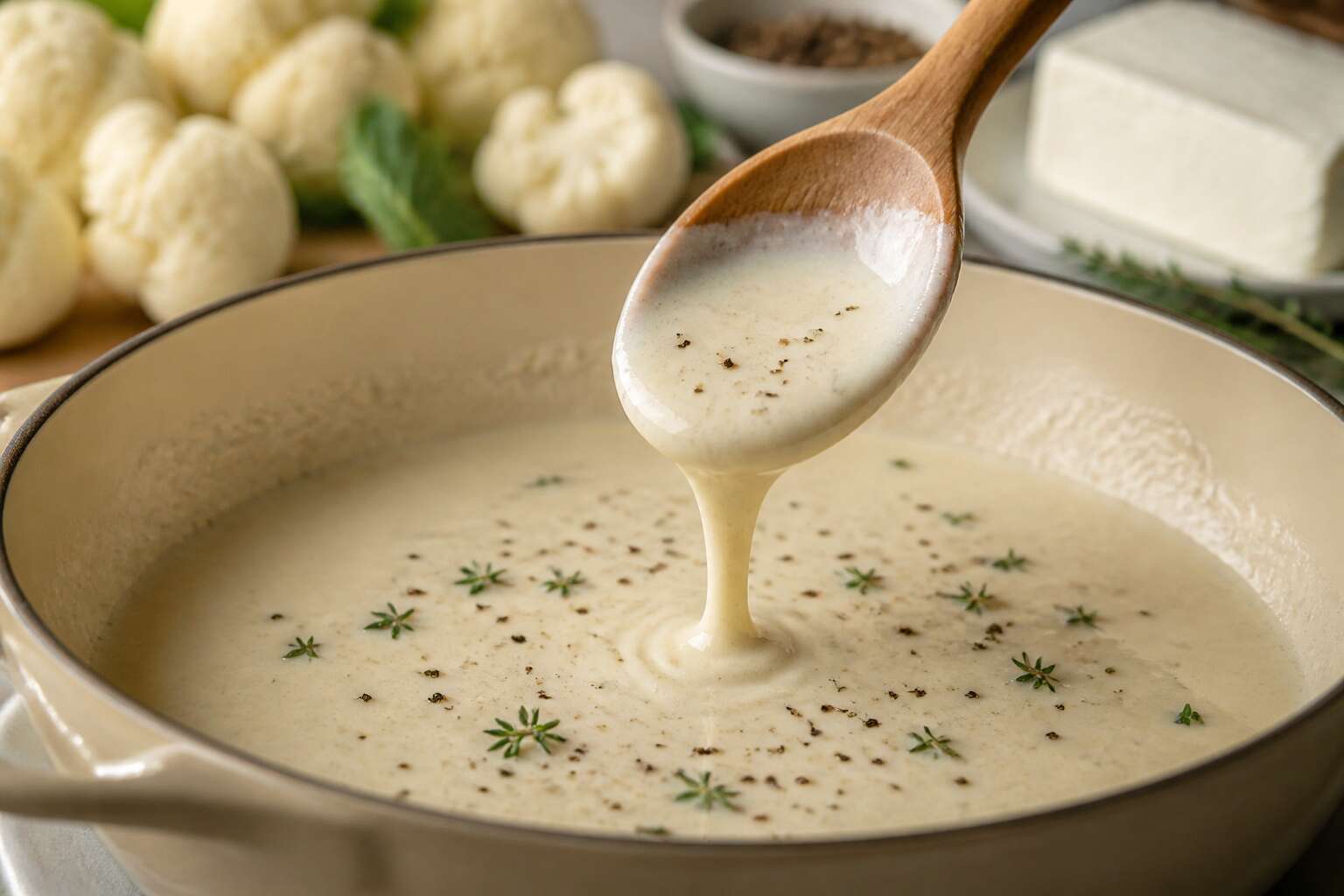
Essential Ingredients for a Low Carb White Sauce
Why Traditional White Sauce Is High in Carbs
Traditional white sauce leans on wheat flour as its thickener, and just two tablespoons pack around 12 grams of carbs. That quickly derails a low carb white sauce recipe before it even begins. Butter and milk add more carbohydrate, turning a simple sauce into a carb overload.
The fix lies in swapping those foundations. Almond flour or coconut flour provides structure without the starch. Heavy cream and cream cheese deliver richness while keeping net carbs low. A splash of chicken stock adds depth without flour.
Here are the essential replacements:
– Use almond flour instead of wheat flour
– Choose full fat cream over milk
– Stir in xanthan gum for a silky finish
These ingredients form the backbone of any low carb white sauce recipe, preserving taste and texture.
The Best Low Carb Flour Substitutes: Almond, Coconut, and Lupin
For any low carb white sauce recipe, the thickener is the pivot point. Lupin flour, a South African pantry staple gaining global attention, offers 80 percent less starch than regular flour. Almond and coconut flours also step in, each with distinct behavior.
- Almond flour blends into silky smooth sauces
- Coconut flour requires extra liquid
- Lupin flour mimics wheat’s binding
These substitutes change how sauce handles heat and dairy. Almond flour thickens gently, while coconut flour needs whisking to avoid lumps. Lupin flour holds up under simmering, making it ideal for baked dishes. Mastering this low carb white sauce recipe comes down to matching the flour to the method.
Choosing the Right Fat: Butter, Ghee, or Heavy Cream
I have ruined many sauces by choosing the wrong fat! In a low carb white sauce recipe, the fat is the first decision. Butter, ghee, and heavy cream each behave differently when heated. Butter offers a rich, milky flavor, though its solids can scorch at high temperatures. Ghee, which has those solids removed, tolerates a higher heat without smoking. Heavy cream contributes its own thickness, so a sauce built on cream needs less thickener overall.
This low carb white sauce recipe shifts with your choice of fat. Butter emulsifies readily with stock or cheese. Ghee leaves a cleaner finish. Cream produces a softer, more yielding texture.
Consider the dish at hand. A delicate poached fish asks for butter. A slow baked casserole suits ghee. A quick weeknight sauce relies on cream.
The Role of Cream Cheese and Parmesan in Thickening
Cream cheese and Parmesan do more than add flavour. They are structural players in this low carb white sauce recipe. Cream cheese melts into a velvety base, its stabilisers helping the sauce cling to vegetables or chicken. Parmesan brings granular proteins that bind with liquid, creating a silky thickness without a single spoon of flour.
I often combine both for a double action. The cream cheese supplies immediate body, while the Parmesan develops a deeper, nutty richness as it melts. Together, they reduce the need for additional thickeners, which matters when you want a clean, low carb result.
A simple ratio works well!
- 60 grams cream cheese per cup of liquid
- 30 grams finely grated Parmesan
- A pinch of nutmeg for balance
That combination yields a sauce that coats a spoon elegantly.
Step by Step Cooking Method for a Silky Smooth Sauce
Melt, Whisk, and Thicken: Mastering the Roux Without Flour
A low carb white sauce recipe demands a gentle hand. Start with a heavy-bottomed saucepan over medium-low heat. Let your butter or ghee melt slowly, swirling it until it becomes a quiet, golden pool. Do not rush this moment! Scorching the fat will wreck the entire sauce.
Whisk in your heavy cream in a steady spiral. The mixture will look thin and almost fragile at first. That is normal. Keep the whisk moving, scraping the bottom edges where lumps like to settle. Introduce your thickeners next, but respect their order:
- Add soft cream cheese in small cubes.
- Whisk until no white specks remain.
- Add grated Parmesan slowly.
- Whisk until the sauce turns glossy.
The silky finish appears when the sauce begins to bubble along the rim. It should coat the back of a spoon without dripping too fast. This low carb white sauce recipe keeps its body without a grain of flour, and the texture stays velvety from first spoonful to last.
How to Avoid Lumps When Using Almond Flour or Xanthan Gum
Executing this low carb white sauce recipe without lumps comes down to how you introduce your thickener. For almond flour, I whisk it into cold heavy cream before any heat touches the pan. That single step prevents the powder from seizing into stubborn clumps.
- Add xanthan gum to the warm sauce, never the hot fat.
- Whisk in a tight circular motion for ten seconds.
- Let the sauce rest for thirty seconds, then assess.
Xanthan gum thickens instantly and unforgivingly. A quarter teaspoon per cup of liquid is plenty. Overusing it turns your sauce into a slick gel. Almond flour needs a fine grind and constant stirring, but it rewards you with a velvety finish.
Simmering and Reducing: Achieving the Perfect Consistency
Simmering defines a low carb white sauce recipe. Once your thickener is incorporated, reduce the heat to the barest whisper of a bubble. A furious boil breaks the emulsion and separates the fat.
Watch the pan. When small bubbles form around the rim and the centre barely shivers, you have reached the ideal state. Cook for four to five minutes. The heat lets the thickener fully hydrate, so the sauce relaxes into a glossy state.
Reducing concentrates flavour, but it also thickens. If the sauce looks thin, simmer for two more minutes. If it coats the back of a spoon, stop. Look for these signs:
- Bubbles stay small and even throughout.
- The sauce leaves a clear trail when a spoon drags through it.
Remove the pan from the heat and let the residual warmth finish the job. Your low carb white sauce recipe is silky and ready.
Seasoning Secrets: Salt, Pepper, and Nutmeg Balance
The sequence matters as much as the ingredients. Warm your cream before it meets the pan, because a cold splash shocks the emulsion and leaves a dull finish. Whisk in one direction only, slowly, and let each addition disappear before the next. When the sauce shimmers, after about four minutes over a low flame, pull it from the heat.
Seasoning is a balance, and I approach it in three passes:
- Salt first, a quarter teaspoon per cup of cream.
- White pepper, a small pinch, for its slow heat.
- Nutmeg, three strokes of the grater, for depth.
Each pass gets a taste. The final pinch of salt, added just before serving, makes the low carb white sauce recipe whole.
Adjusting Thickness with Additional Cream or Broth
The pan tells you everything. I wait for the cream to heat separately, then pour it into the melted butter with a steady hand. Whisk constantly, one direction only, until the first bubble appears at the edge. Lower the heat immediately!
Now the sauce needs a slow simmer. Three minutes of gentle bubbling transforms the texture. Test it by lifting the whisk: a smooth ribbon that holds for a second means it is done. If it seems thin, add a tablespoon of cream. For a lighter body, stir in a splash of broth.
- Add cream gradually, whisking fully.
- Add broth only if you want a less rich finish.
This low carb white sauce recipe rewards your attention, and the result is silk.
Making a Dairy Free Version with Coconut Milk and Olive Oil
The pan heats over a moderate flame. For this low carb white sauce recipe, every motion matters. Whisk the cream in slow circles. When the first bubble surfaces at the edge, lower the heat. Three minutes of gentle bubbling gives the sauce body. Lift the whisk and watch the ribbon fall; it should pause before melting back.
Making a dairy free version means trading butter for olive oil and cream for coconut milk. The olive oil turns golden in the pan. Add coconut milk and whisk without stopping. The sauce thickens to a glossy finish. To keep it silky:
- Warm the coconut milk separately before pouring.
- Whisk in one direction until the oil emulsifies.
- Simmer for two minutes, no more.
This alternative holds the same low carb white sauce recipe promise, only lighter.
Flavor Variations and Custom Add Ins
Garlic and Herb White Sauce for Vegetables
Garlic and herb white sauce can rescue any vegetable from the sad corner of your fridge. For a low carb white sauce recipe, the base stays the same, but the extras change everything. Roast garlic cloves first. Their mellow sweetness beats raw garlic’s harshness.
Try these herb combinations:
- Thyme and oregano for a Mediterranean flavor
- Parsley and chives for freshness
- Rosemary for a bold, woody taste
Custom add ins go beyond herbs. One spoonful of Dijon mustard adds a tangy kick. Grated lemon zest brightens the sauce without any extra carbs. For richness, stir in a handful of grated parmesan. This sauce pairs well with grilled asparagus or roasted Brussels sprouts. Pour it over, toss, and serve.
Cheesy Low Carb White Sauce for Cauliflower and Casseroles
Cauliflower needs help, and a cheesy white sauce provides it. For casseroles, the sauce must be thick enough to coat every piece, so add extra parmesan and let it bubble slowly.
Flavor variations come from the cheese. Swap half the cheddar for smoked gouda, or add a spoonful of cream cheese for silkiness. Custom add ins push the sauce further:
- Crispy bacon bits for salt and crunch
- Sautéed mushrooms for earthy depth
- A pinch of cayenne or smoked paprika for heat
That last one is a warning. This low carb white sauce recipe suits cauliflower cheese and baked casseroles. Stir in a handful of grated gruyere and watch it turn golden.
Spicy Creole or Cajun Inspired White Sauce
Creole and Cajun cooking depend on layers of heat and aromatics. A low carb white sauce recipe can carry those flavours without the usual roux. Start with the base sauce, then introduce the holy trinity of onion, celery, and green pepper, finely diced and softened in butter. Add garlic and a spoonful of tomato paste for colour.
- Paprika, both sweet and smoked
- Cayenne for a sharp kick
- Dried thyme and oregano
- A pinch of white pepper
Let it simmer for ten minutes. The sauce turns orange and develops a gentle heat. For a deeper Cajun character, stir in chopped andouille sausage or a splash of hot sauce. This version works well over grilled chicken or prawns.
Mushroom and Thyme Sauce for Steaks and Chicken
There is a magic to a low carb white sauce recipe that adapts to the main course. For a steak or a roast chicken, a simple base sauce transforms into a forest floor of umami with the addition of sautéed mushrooms. The key is to brown the fungi properly, letting them release their moisture and caramelize in the butter before adding the cream. This builds a depth of flavour that a plain sauce lacks.
Thyme is the perfect companion here, its earthy, slightly floral notes cutting through the richness of the cream. A low carb white sauce recipe like this one is remarkably forgiving, so you can build layers at your own pace. Add a splash of sherry or brandy for a touch of sophistication if you feel inclined. The sauce clings beautifully to a seared fillet or coats the crisp skin of a chicken thigh.
For those who enjoy a little more complexity, consider these optional add-ins to customize the flavour profile:
– A teaspoon of Dijon mustard for sharpness
– A few chopped shallots, sweated down until translucent
– A dash of Worcestershire sauce for a savoury kick
– Finely grated lemon zest to brighten the final palate
This version of the low carb white sauce recipe proves you do not need wheat flour to achieve a luxurious, velvety texture that rivals any classic French preparation. The sauce reduces to a silky consistency that is rich without being heavy.
Parmesan and Lemon Zest for a Light, Fresh Finish
While a bold mushroom sauce suits a winter evening, this low carb white sauce recipe has a lighter persona. Parmesan and lemon zest deliver a bright, fresh finish that suits grilled fish or poached chicken. The saltiness of Parmesan replaces the need for excess salt, while lemon zest introduces a fragrant sharpness that lifts the cream base.
I find this version ideal for asparagus or a simple green salad. The sauce remains rich, but the zest cuts through that richness with restraint.
- Fold in blanched peas for a springlike side.
- Use it as a base for baked haddock.
- Drizzle over courgette ribbons.
After the final taste, the sauce should feel clean rather than weighty.
Serving Suggestions and Pairings That Keep Carbs Low
Pouring Over Roasted Vegetables and Greens
It is a quiet alchemy, watching this pale sauce turn a plain dish into something substantial. For those watching their carbohydrate intake, the joy lies not in denial but in the application. A generous pour of this low carb white sauce recipe over a bed of wilted spinach and roasted broccoli transforms humble greens into a meal that feels indulgent. The sauce clings to the roasted ridges of the vegetables, creating a satisfying mouthfeel without the need for starchy potatoes or grains.
When considering pairings, a few specific combinations work exceptionally well.
- Spoon it over charred asparagus with a grating of extra parmesan.
- Ladle it onto roasted cauliflower steaks for a creamy contrast.
- Use it to bind sautéed mushrooms and kale into a hearty side dish.
The sauce acts as a delivery system for flavour, making even the most mundane plate of vegetables feel like a secret. I find that the richness of the cream and butter necessitates a brightness to cut through the weight. A squeeze of lemon or a scattering of fresh herbs, added just before serving, keeps the palate keen. For a more substantial offering, serve this low carb white sauce recipe over a bed of roasted pumpkin or butternut, letting the natural sweetness of the squash play against the savoury depth of the cheese. The pairing turns a side dish into the main event, proving that a life with fewer carbs does not mean a life with less comfort.
Using It as a Base for Low Carb Casseroles and Bakes
When the sauce becomes a foundational layer, it opens the door to low carb casseroles that hold their shape without flour or breadcrumbs. The low carb white sauce recipe thickens with cream cheese and parmesan, so it clings to every ingredient.
For a bake, alternate slices of roasted aubergine with shredded chicken and a spoonful of the sauce. Top with mozzarella and bake until bubbling. The creaminess carries the dish. Pair it with:
- Grilled halloumi and baby marrow slices
- Shredded leftover beef with spinach
- Cauliflower florets and crispy bacon
Each combination keeps the carbohydrate count low while the sauce delivers the texture people expect from a traditional bake.
Drizzling on Chicken, Fish, or Pork Chops
A low carb white sauce recipe becomes a finishing touch for weeknight proteins. Drizzle it over grilled chicken, pan seared hake, or a thick pork chop.
The sauce clings to the surface without washing out the meat’s natural character. Use a sparing hand; a few spoonfuls per portion is enough. For fish, let the sauce sit on the side so the fillet stays crisp. For chicken or pork, spoon it directly over the resting meat. This method keeps carbohydrates minimal while adding a silky mouthfeel. Serve with steamed broccoli or a simple green salad.
Low Carb Pasta Alternatives: Zoodles, Shirataki, and Palmini
Serving a low carb white sauce recipe over zoodles creates a satisfying meal. Spiralize the courgettes, then sauté them briefly so they retain a slight crunch. Shirataki noodles require more patience. Rinse them well, dry them in a hot pan, and only then fold in the sauce.
- Zoodles for fresh, garden flavor.
- Shirataki for a chewy, satisfying texture.
- Palmini for a sturdy base that absorbs rich sauces.
Palmini, made from hearts of palm, brings a subtle sweetness. Warm the sauce with the palmini and watch it transform. Serve alongside grilled halloumi or a handful of rocket leaves.
Turning It into a Creamy Soup or Chowder Base
When you thin this low carb white sauce recipe with chicken or vegetable stock, it becomes something different. A creamy soup base that suits the cold Cape winters. I often simmer it with shredded chicken and a handful of baby spinach. For a chowder, add chopped cauliflower florets and firm white fish. The sauce clings to each piece, giving body without a single potato in sight.
One word of caution: keep the heat gentle. Boiling can split the cream. Stir slowly and let the ingredients warm through together.
- Cauliflower and leek for a mild, comforting bowl.
- Smoked snoek and celery for a distinctly South African chowder.
- Roasted butternut, if you have the carb budget, for sweetness.
Each version starts from the same low carb white sauce recipe, but the toppings change the character entirely. Nutmeg and lemon both work here, though they take the sauce in opposite directions.
Storage, Reheating, and Troubleshooting Common Issues
How Long Does Low Carb White Sauce Last in the Fridge?
Your low carb white sauce recipe keeps well when stored properly. After cooling, transfer it to an airtight container and refrigerate. It lasts up to four days, though you may notice separation as the fat rises. That is normal.
Reheat gently in a small saucepan over low heat. Whisk constantly to recombine the ingredients. If the sauce turns grainy or clumps, the cream or cheese has likely coagulated. Add a splash of warm broth or cream to restore its texture.
- Too thick after chilling? Stir in a spoonful of broth.
- Lumpy after reheating? Whisk harder or pulse with a blender.
- Unpleasant odor? Discard immediately.
Troubleshooting these common issues requires patience. Sauces made with almond flour or xanthan gum behave differently than wheat based versions. Keep the heat low and your sauce will remain smooth throughout its fridge life.
Freezing and Thawing Without Breaking the Sauce
Freezing extends the practical life of your low carb white sauce recipe, though it demands a deliberate approach. The emulsion, already delicate from cream and cheese, will separate under temperature stress. For the best outcome, freeze the sauce in single portions. Ice cube trays work well for small servings, while small resealable containers suit larger meals.
The real challenge arrives during thawing. A microwave will break the sauce irreparably, leaving a grainy, watery mess. Instead, transfer the frozen block to the refrigerator overnight. Gentle cooling preserves the fat and protein structure better than any rapid method.
- Freeze within two hours of cooking
- Leave headspace in containers for expansion
- Label with the date and batch number
Reheating after thawing requires the same low heat habit you use for fresh sauce. Warm broth or cream, added slowly while whisking, restores the silky texture. A stabiliser like xanthan gum, whisked in during the initial cooking phase, keeps the sauce cohesive through the thaw cycle. Sauces thickened with almond flour freeze less predictably, so expect some texture shift with that variation.
Reheating Techniques to Preserve a Smooth Texture
Your low carb white sauce recipe keeps well in the fridge for three to four days. Store it in a sealed container, and press plastic wrap onto the surface to prevent a skin. When reheating, the golden rule is slow and low. A saucepan over gentle heat works best. Add a tablespoon of cream or broth, then whisk until the sauce flows smoothly.
Troubleshooting usually involves texture. If the sauce turns watery, that means the fat separated. Take it off the heat and whisk in a teaspoon of cold butter. If it feels grainy, pass it through a fine sieve. These fixes restore the sauce without altering its character.
Fixing a Grainy or Curdled Sauce: Quick Rescues
Storage habits determine how the sauce behaves later. A wide-mouth glass jar allows for easy spooning and a clean sweep of the sides. The low carb white sauce recipe settles into layers overnight, with the fat rising gently to the top. This is normal, not a fault. A quick stir before reheating brings it back together.
Reheating a curdled sauce starts with understanding why it broke. The proteins in cream or parmesan tighten when exposed to sudden heat. A water bath offers the gentlest revival. It warms the sauce evenly, allowing the emulsion to reform without stress.
When curdling has already happened, rescue it with these steps:
- Remove the pan from the heat immediately.
- Whisk in two tablespoons of cold cream, one at a time, until the sauce relaxes.
- If streaks remain, blend the sauce with an immersion blender for ten seconds.
The low carb white sauce recipe recovers well when you act quickly. The flavour stays intact, and the texture returns to a smooth finish.
Thinning or Thickening Leftovers the Right Way
The real test of any low carb white sauce recipe comes on day two. Stored properly, it holds its character for up to four days in the fridge. Use a shallow container so the sauce cools fast. A layer of plastic wrap pressed onto the surface stops a skin from forming.
Reheating demands patience. Cold sauce thickens into a stubborn mass, so warm it over low heat and stir constantly. If it tightens too much, thin it with warm stock or milk. Add liquid a tablespoon at a time until the consistency loosens.
Thickening leftovers works differently. Whisk in a teaspoon of xanthan gum or grated parmesan, then simmer for two minutes. This low carb white sauce recipe responds well to small corrections. You can rescue a runny batch without dulling the flavour.
- Use broth for thinning without adding fat
- Use cream for a richer, thicker result
- Use parmesan for flavour and body
Common Mistakes and How to Avoid Them
Storage is where most home cooks stumble. I have seen a silky sauce turn into a rubbery block overnight because the container was too deep. A shallow dish cools the sauce fast. Press plastic wrap onto the surface, and it stays cooperative for four days.
Reheating needs a gentle hand. Cold sauce thickens stubbornly, so use low heat and stir constantly. If it seizes, add warm stock or cream one spoon at a time. Do not rush! That is the moment the sauce shows its texture.
- Whisking cold liquid into hot sauce causes lumps.
- Adding too much xanthan gum turns it into jelly.
- Boiling it hard breaks the emulsion.
I always keep my low carb white sauce recipe flexible. A teaspoon of parmesan fixes a thin batch, while extra broth rescues a thick one. Watch the heat and trust small corrections.
Nutritional Breakdown and Macro Comparison
Calories and Fat Content per Serving
One serving of traditional béchamel often exceeds 200 calories, with refined flour doing most of the heavy lifting. A low carb white sauce recipe reshuffles that ledger, pushing protein and fat into the leading roles. For every 100 millilitres, an almond based version offers roughly 5 grams of protein, 18 grams of fat, and just 3 net carbs. The calorie total hovers near 190, which seems comparable, but the source shifts from starch to cream and butter.
That distinction changes how your body responds. Coconut milk variations trim the count to about 160 calories per serving, while lupin flour adds a denser mouthfeel and slightly higher protein. Fat content swings between 12 and 22 grams depending on the thickener. For anyone tracking ketones, this macro profile makes the sauce an ally rather than an indulgence.
Net Carbs in Almond Flour vs. Traditional Wheat Flour
Traditional wheat flour delivers roughly 70 grams of carbohydrates per 100 grams, nearly all of it digestible starch. Almond flour, by contrast, offers about 10 grams of total carbs per 30 gram portion, and once fibre is subtracted, the net carbs drop to a mere 3 grams. That gap changes the entire macro profile of a low carb white sauce recipe.
The practical difference appears in the bowl. A wheat based roux thickens through gelatinised starch, which raises blood sugar quickly. Almond flour thickens through fat and protein, so the sauce coats without the glycemic spike. This matters for South African home cooks who want the familiar creaminess of a classic white sauce without the carbohydrate load.
- Wheat flour: roughly 70g net carbs per 100g
- Almond flour: around 10g total carbs per 100g, with only 3g net per serving
How to Scale the Recipe for Meal Prep and Keto Diets
Tracking macros on a keto diet changes how you see a sauce. A low carb white sauce recipe typically offers 4 grams of fat and 1 gram of net carbs per 60 ml serving, assuming you use heavy cream and Parmesan. The protein count sits around 2 grams, which makes it a fat delivery system rather than a carbohydrate source.
Scaling the recipe for meal prep requires no special equipment. Multiply the ingredients by two or four, then simmer gently to maintain the same thickness.
- Single batch: 500 ml, roughly 8 servings
- Double batch: 1 litre, covers a week of lunches
- Family batch: 1.5 litres, freezes cleanly for a month
Portion the sauce into glass jars with dated lids. When reheating, add a teaspoon of cream per 100 ml to restore the silky texture. The macro numbers stay consistent because the fat and protein scale linearly.

0 Comments