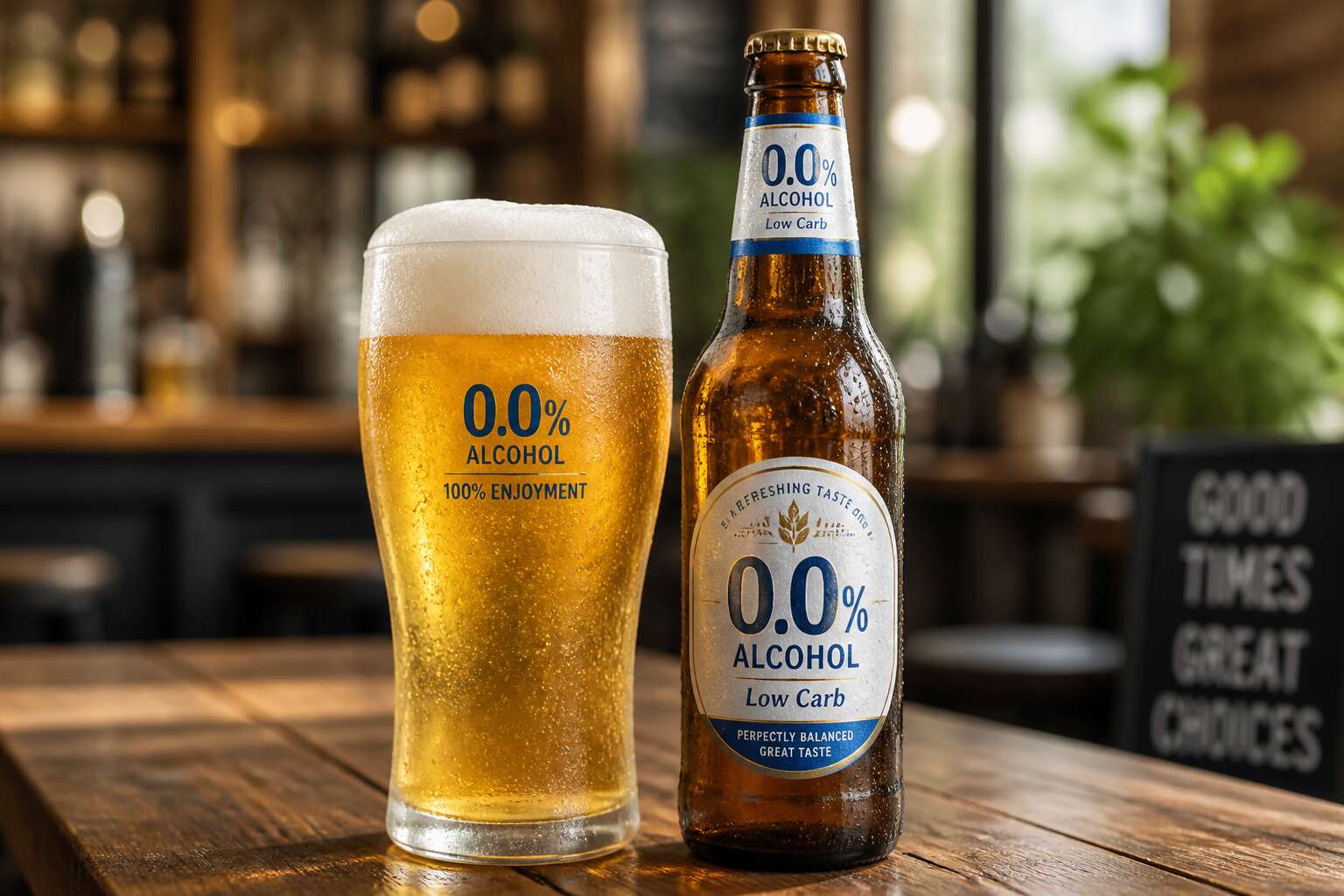
Understanding Alcohol-Free, Low-Carb Brews
Defining Non-Alcoholic Beer
Few drinkers pause to consider the molecular boundary that separates a lager from a non-alcoholic brew. In South Africa, where beer culture runs deep, that boundary now carries serious nutritional weight. Alcohol-free does not simply mean removing ethanol; it means rethinking the entire fermentation path.
Defining non-alcoholic beer starts with the legal threshold, typically under 0.5% alcohol by volume. But the carbohydrate story runs parallel. Traditional brewing leaves residual maltose and dextrins, which are exactly what low carb zero alcohol beer seeks to eliminate. This requires a different mash schedule and often an enzyme treatment that breaks sugars into unfermentable, or simply absent, fractions.
- Cold contact fermentation preserves hop aroma with minimal alcohol production.
- Vacuum distillation strips ethanol at low temperatures.
- Membrane filtration physically removes alcohol after full fermentation.
Each method changes the final sugar profile. Reading a label means checking both ABV and total carbs, since a dealcoholized ale can still carry a hefty carbohydrate load. The low carb zero alcohol beer category, therefore, demands attention to processing, not just the absence of alcohol.
What Does Low-Carb Mean in Beer?
Standard commercial lagers carry 10 to 15 grams of carbohydrates per 330 millilitres. That is a heavy load! It explains the surge in demand for low carb zero alcohol beer among South African drinkers who track their daily intake and blood glucose responses.
Low-carb refers to the sugars that survive mashing and fermentation. These residual chains, largely maltose and dextrins, give beer its body and mouthfeel. The body breaks them into glucose, stimulating insulin release. Removing ethanol does not remove this effect. A beverage can have zero alcohol and still behave like a sugary drink metabolically.
The category’s low-carb definition rests on measurable limits:
- Total carbohydrates below 3 grams per serving
- Added sugars below 0.5 grams
- No maltodextrin or glucose syrup added post brewing
These limits separate a genuine low carb zero alcohol beer from a dealcoholized product that retains its original carbohydrate load.
How It Differs from Traditional Ales and Lagers
Traditional ales and lagers have a simple assignment: ferment sugars into alcohol and then stop. Alcohol-free, low-carb brews face a trickier brief. They must remove the ethanol and the carbohydrates while holding onto enough flavour to stay interesting.
The brewing paths differ considerably. Standard lagers undergo long fermentation that converts most sugars to alcohol. A low carb zero alcohol beer often relies on special yeast strains or dealcoholization methods that halt conversion early. This changes the final profile. Traditional ales give you a round, malty body and a warm finish. The alcohol-free version arrives lighter and crisper, with a more restrained character.
A quick summary of what separates the two:
- Traditional lagers and ales prioritise malt depth and alcohol warmth.
- Low carb zero alcohol beer prioritises refreshment without the carbohydrate load.
Understanding this difference helps you order with intent, whether you choose a heavy lager or a brew that respects your daily carb allowance.
The Rise of Better-for-You Beverages
Across South Africa, the beverage aisle tells a story of changing priorities. Consumers read labels with the same care they once reserved for wine estates and whisky finishes. The rise of better-for-you beverages reflects a shift toward mindful consumption, where indulgence and discipline coexist.
How do you stay social without derailing your goals? That is the question low carb zero alcohol beer answers, one that traditional brews never had to consider. For the evening braai, the after-work catch-up, or the weekend cricket match, it offers a familiar ritual with a lighter footprint.
The most telling sign of this movement is its staying power. What began as a niche alternative has become a fixture on restaurant menus and retailer shelves from Cape Town to Durban. The continued demand for low carb zero alcohol beer signals something deeper than a trend; it reflects an alignment with how South Africans choose to live.
Brewing Methods and Ingredient Innovations
Malt Modification for Reduced Carbohydrates
Malting sets the carbohydrate baseline. Traditional brewers let barley germinate fully, converting starches into fermentable sugars. For low carb zero alcohol beer, we interrupt that process early. We restrict enzyme activity during steeping and adjust kilning temperatures to stop starch breakdown prematurely.
- Steep at lower temperatures to limit enzyme function.
- Kiln quickly to set a less fermentable profile.
- Add enzymes like glucoamylase to cleave remaining dextrins.
The result is a wort with fewer unfermentable complex carbs. Some brewers pair this with specialty malts bred for higher amylose content. That gives the beer body without the carbohydrate load. These modifications keep low carb zero alcohol beer crisp and satisfying, not syrupy or thin. We get a crisp sip that doesn’t wreck your macros, which is the real prize here.
Enzymatic and Physical Carb Removal
Most drinkers assume the carbs in a 0.0% lager come from sugar. They don’t. The real culprits are dextrins, the unfermentable starch fragments left behind after malting. Enzyme treatments tackle these head-on. Brewers add glucoamylase and pullulanase, which chop dextrins into simple sugars that yeast can fully consume. For a low carb zero alcohol beer, this enzymatic step is non-negotiable. The payoff is a clean, dry finish with zero residual sweetness.
Physical removal works differently, and it’s gaining traction in low carb zero alcohol beer production. Reverse osmosis and nanofiltration push the finished brew through membranes that trap larger carbohydrate chains. Brewers discard the retained fraction, keeping the character while slashing carbs. It’s exact work.
Common techniques brewers stack together:
- Glucoamylase dosing for residual dextrins
- Pullulanase for branched starch chains
- Reverse osmosis for post-fermentation carb stripping
- Nanofiltration for smaller sugar molecules
Preserving Hop Aroma and Bitterness
Hop oils are volatile by nature, fading quickly under heat or oxygen. In low carb zero alcohol beer, their preservation demands precise handling. Brewers rely on cold dry hopping after primary fermentation, keeping the tank at two degrees Celsius. Some introduce hop pellets in a mesh basket that rotates gently. Others use nitrogen sparging to protect the aromatic compounds.
Ingredient innovations also play a role:
- Enzymatically modified hop extracts that resist oxidation
- Carbon dioxide hop oil, which captures pure aroma without heavy resin
Bitterness is trickier still. Standard boiling is absent in many alcohol free brews, so alpha acids never isomerize. Brewers instead add pre isomerized hop products after filtration. These deliver a stable, clean bite. The final low carb zero alcohol beer holds its hop profile intact, from first scent to last sip.
Special Yeast Strains and Fermentation Controls
Yeast creates or destroys any attempt at a balanced brew. Most brewers rely on standard strains, but specialized cultures ferment sugars without producing alcohol. These strains consume glucose and maltose while leaving body intact. Fermentation controls matter just as much! Cold fermentation slows yeast activity. Pressurized tanks prevent ester formation. Rapid chilling halts conversion at the right moment.
I have seen brewers use:
- High gravity fermentation then dilution
- Pulsed feeding of wort
- Temperature ramping to stress yeast cells
These methods keep residual carbohydrates low and flavor clean. The result is a low carb zero alcohol beer with genuine mouthfeel and no sacrifice in refreshment. It takes precision, not magic.
Natural Flavors and Minimal Additives
Brewing methods have moved beyond the clinical and into the artisanal. Hop oils extracted at low temperatures capture citrus and pine without boiling off delicate compounds. Fruit essences from rooibos and granadilla add complexity without sugar. In my experience, the cleanest low carb zero alcohol beer relies on minimal intervention.
No preservatives are needed when sterile filtration handles stability. No artificial sweeteners mask off notes. The malt backbone does the work.
Consider what brewers leave out:
- Colourants that hide cloudy imperfections
- Foam stabilisers that mask poor carbonation
- Adjunct syrups that pad the carbohydrate count
Each omission forces the brewer to respect the raw ingredients. That discipline makes a low carb zero alcohol beer taste honest, not engineered.
Carb Counts, Calories, and Nutritional Labels
Typical Carbohydrate Ranges per Serving
Most low carb zero alcohol beer brands list between 2 and 12 grams of carbohydrates per 330 milliliters. For a standard serving, that range splits into three distinct groups. Calories hover from 40 to 90, with no alcohol to disguise residual sweetness. The nutritional label distinguishes the drinkers’ expectations:
- Crisp lagers: 2 to 5 grams of carbs
- Sessionable pilsners: 6 to 8 grams
- Robust malt-forward styles: 9 to 12 grams
I read these numbers before I twist the cap. The calorie count matters, but the carb tally reveals how this style aligns with a mindful afternoon. Those digits are the agreed truth between brewer and drinker.
Caloric and Macronutrient Profiles
Calories reveal the discipline of a brewer. In a low carb zero alcohol beer, every kilocalorie traces back to residual carbohydrate or a small protein presence from malt. The alcohol is gone, and with it, the seven calories per gram that a regular lager carries.
The label reads without fanfare. A 330 millilitre serving lists total kilocalories alongside the carb tally. Protein levels stay modest, often two grams or less. Fats do not appear. The macronutrient story stays simple:
- Residual carbohydrates from unfermented sugars
- Trace protein from malted grain
- No alcohol contribution
That final line changes every assumption. Without ethanol to soften the finish, the balance depends on the brewer’s grain bill and the enzymes used to break starches. Anyone searching for a low carb zero alcohol beer can read the label, count the grams, and decide if the numbers fit their day.
Comparing with Light Beers and Regular Beers
Regular lager in South Africa carries about 150 kilocalories per 330 millilitre. Light beer trims that to roughly 90. A low carb zero alcohol beer often sits below 40. That gap changes how I plan an evening!
Carb counts follow a similar descent. Standard brews hold around 10 grams per serving. Light versions drop to 5. The low carb zero alcohol beer typically lands between 1 and 3 grams. Nutrition labels reveal the difference without fanfare: conventional beers list alcohol by volume, while these focus on residual extract.
- Regular lager: 10 grams carbs, 150 kilocalories
- Light beer: 5 grams carbs, 90 kilocalories
- Low carb zero alcohol beer: 1 to 3 grams carbs, under 40 kilocalories
I find this label comparison telling. The brewer’s skill surfaces in the grain bill and enzyme strategy, not in the alcohol column.
Identifying Hidden Sugars and Maltodextrins
When scanning a label for a low carb zero alcohol beer, the ingredient list and nutritional values matter most. Maltodextrin, a polysaccharide used to build body, barely registers on a carb counter but still spikes blood sugar. Brewers sometimes add sugar to balance acidity or mask bitterness. I always check the residual extract column, not just the headline numbers.
What to scrutinize:
- Ingredients listed before hops
- Any form of dextrose or glucose
- The difference between total carbs and sugars
That distinction matters, because the beverage can claim few carbs yet carry sugar alcohols or dextrins that behave differently. Reading carefully changes my selection!
How to Read Nutrition Facts Panels
The most important number on a South African beer label is not the carbohydrate total, it is the serving size. A 330 ml bottle may list per 100 ml values that look attractive, but the real count for the whole bottle is three times higher. For low carb zero alcohol beer, this distinction is decisive.
Nutrition facts panels in South Africa use kilojoules for energy, not calories. The kilojoule figure can be divided by 4.2 to approximate calories. For a low carb zero alcohol beer, the total carbohydrate value includes sugars, starches, and sugar alcohols.
- Kilojoule values per 100 ml dominate local labels
- Serving sizes differ between imports and craft offerings
- Total carbohydrate figures include sugar alcohols and dextrins
The carbohydrate gram value on the panel deserves careful reading. The extract from unfermented malt and the body builders contribute to the final figure. Understanding the panel structure guides the selection of a low carb zero alcohol beer.
Role of Fiber and Sugar Alcohols
Fiber performs an unexpected function in low carb zero alcohol beer. Some producers add soluble fiber to recreate the texture lost when enzymes strip away fermentable sugars. This fiber appears on the label as carbohydrate yet passes through the body unabsorbed. Sugar alcohols work in a similar way. Erythritol and sorbitol contribute mouthfeel without raising blood glucose, but they still count toward the total gram figure.
The difference changes how South Africans read their bottles. A label showing 5 grams per 100 ml might contain 2 grams of fiber and sugar alcohols, leaving only 3 grams of digestible carbohydrate. Local nutrition labels do not require separate disclosure of these components. The real number hides beneath the declared total, accessible only to those who compare the full panel.
Health Benefits and Lifestyle Fit
Blood Sugar Response and Glycemic Load
For those mindful of glucose fluctuations, a low carb zero alcohol beer offers a gentler experience than standard brews. Because carbohydrates are reduced and alcohol is absent, the glycemic load remains modest, allowing your body to process it without sharp spikes. This matters for active South Africans who balance social drinking with metabolic health.
Blood sugar response depends on fermentation efficiency and residual sugars. In a typical low carb zero alcohol beer, carbohydrates fall under three grams per serving, which translates to a negligible insulin reaction.
Consider how this fits a lifestyle centered on consistency. The practical benefits become clear when you look at daily routines:
- Steadier energy levels during evenings out
- Reduced post-beer cravings for refined snacks
- Compatibility with low glycemic eating patterns
These advantages make it easier to enjoy a cold one while staying true to your health goals.
Compatibility with Ketogenic and Low-Carb Diets
Ketogenic living demands exactness over every gram of carbohydrate. For that reason, a low carb zero alcohol beer earns its place in a strict eating plan. It contains under three grams of carbs per serving, which means it does not interrupt fat adaptation. The absence of ethanol further supports metabolic stability, since the liver can prioritize fat metabolism over alcohol clearance. This matters for South Africans who train hard yet still want to share a round without compromising macronutrient precision.
- No disruption to daily carb limits
- Minimal insulin response from residual sugars
- Consistent energy during evening socials
The fermentation process leaves little room for hidden carbohydrates. That transparency lets you enjoy the ritual without recalculating your intake. A low carb zero alcohol beer simply fits where regular brews cannot.
Hydration, Exercise, and Recovery
After a punishing session in the Gauteng heat, your body craves fluids and glycogen restoration. A low carb zero alcohol beer delivers both without the crash. Its water content supports rehydration, while the absence of ethanol spares your liver for glucose regulation. That matters when your next training block starts at dawn.
Consider how this fits your recovery routine. Each sip replaces lost volume, not carb overload.
- Replenish fluids without sugar spikes.
- Maintain electrolyte balance with lower insulin interference.
- Enjoy a social drink without delaying muscle repair.
For runners on the Cape Town trails, this practical choice keeps you sharp. No hangover, no bloat, just clean hydration and a clear head for tomorrow’s miles.
Avoiding Alcohol-Related Risks
Choosing a low carb zero alcohol beer removes the metabolic cost of ethanol while preserving the social ritual. Your liver focuses on glucose regulation and fat metabolism instead of processing a toxin. Deep sleep stays intact, and morning cortisol remains steady.
In social settings, this drink lets you hold a glass without cloudy judgment. You can drive, converse clearly, and avoid the impulsive decisions that follow alcohol. Over time, your immune system and cardiovascular profile benefit from the absence of ethanol.
- No hangover disruption to family plans
- No alcohol-related anxiety the next day
- No added sugar from traditional mixers
For South Africans who value both productivity and leisure, a low carb zero alcohol beer fits seamlessly. It offers the taste and ceremony of beer without the risks that accompany drinking.
Potential Digestive Sensitivities and Trade-Offs
Switching to a low carb zero alcohol beer changes the metabolic equation. You get the crisp mouthfeel and hop finish without the insulin spike from sugar or the liver stress from ethanol. For someone training in the morning, this translates to stable energy and a clearer head. That product fits into daily macronutrient targets without requiring a cheat day.
But sensitivities remain. Some of these beers use sugar alcohols or modified fibers to adjust body. These ingredients can trigger bloating or laxative effects in sensitive guts. Also, the filtration process might strip certain B vitamins that regular beer provides. You trade a few nutrients for convenience and balance. The key is testing a small serving first and noting your own reaction.
Choosing the Best Alcohol-Free, Low-Carb Beers
Evaluating Taste and Mouthfeel
Choosing the best low carb zero alcohol beer often comes down to a brutal tasting session. That crisp lager you remember may arrive watery and disappointing. Look for a lingering bitterness and a carbonation that actually pricks the tongue rather than a limp fizz. The body should feel substantial enough to hold its own without the alcohol warmth.
When evaluating options, focus on three markers:
- Hop bitterness that sits on the palate for a few seconds.
- Carbonation that gives a clean bite but doesn’t turn sharp.
- A silky texture that mimics a full-strength pour.
A low carb zero alcohol beer that passes these tests earns its place in the cooler. The right pick will leave you satisfied and still ready to drive home.
Popular Brands and Emerging Craft Options
Scan the fridge for a low carb zero alcohol beer and a few brands surface. Heineken 0.0 delivers a familiar lager character. Budweiser Zero appeals to those who prefer a straightforward, sessionable sip. These large-scale options offer consistency, but they no longer own the category.
- Brooklyn Special Effects brings hoppy bitterness
- Big Drop’s Galactic Milk Stout offers roasted depth
- Jack Black’s Zero Lager is a local favourite with lemon zest
Craft brewers across South Africa are taking notice. Small batches of low carb zero alcohol beer are appearing with experimental hops and tropical fruit profiles. These offerings stay lighter on carbs without losing the mouthfeel that makes beer worth drinking. For anyone who has dismissed alcohol-free as bland, the current crop of options deserves a second look.
Retail Availability and Online Shipping
Whole bays of supermarket fridges now belong to low carb zero alcohol beer in South Africa, and courier vans carry the rest. Online retailers ship to suburbs and farms alike, though the delivery experience differs sharply from one service to the next. A case left on a stoep in January heat will lose its charm fast, so the best suppliers pack with ice packs and insulation.
When comparing suppliers, three factors stand out:
- Best-before dates on well-known labels often sit closer than expected
- Climate-controlled courier partners reduce spoilage risk
- Delivery windows shape the final choice
Cape Town and Johannesburg command the widest selection. For the rest of the country, national platforms extend coverage. A reliable online source for low carb zero alcohol beer reaches most urban centres within two days, but freshness depends on dispatch timing and storage discipline.
Pairing with Cuisine and Social Settings
The best low carb zero alcohol beer for a braai rarely matches the one for a long Sunday lunch. Citrus-forward options pair well with rich boerewors, while a dry pilsner style complements grilled snoek. I have learned that serving temperature matters more than most people admit.
Social settings shape the choice. A cricket Saturday needs crisp refreshment. An evening with friends invites a maltier version. For spicy peri-peri, select a bitter hop finish. For seafood, a subtle clean note works best.
The occasion dictates the final decision. Celebrations favour easy drinking. Quiet dinners allow for more complexity.
Expert Reviews and Consumer Feedback
One beer critic I know refuses to rate alcohol-free lagers on the same scale as their boozy cousins. He calls it an unfair comparison. That leaves the rest of us to sort through online reviews with a distinct lack of confidence. Consumer feedback for the best low carb zero alcohol beer often shows no consensus. Some praise the mouthfeel, others complain about a metallic finish. Experts focus on balance and hop expression. Drinkers focus on whether it actually tastes like a real beer after a long day. Those two perspectives rarely meet.
What does emerge from the noise? A few patterns worth noting.
- Bottle condition matters more than brand reputation.
- A bitter aftertaste divides opinion sharply.
- Temperature at opening changes perceived sweetness.
Reviews that align with expert ratings tend to mention these three points. Trust those.
Market Growth and Future Directions
Surging Demand for Non-Alcoholic Options
Global sales of non-alcoholic beer are projected to grow by nearly 8% annually, a pace that surprised seasoned beverage analysts. South Africa mirrors this momentum, with consumers reassessing their relationship with alcohol. The demand for low carb zero alcohol beer reflects a structural shift in how people approach moderation, performance, and daily function.
Retailers and craft breweries are responding. Dedicated alcohol-free sections are expanding, and new production lines are being built specifically for this category. The future points toward wider availability in restaurants, gyms, and convenience stores, a shift toward clarity over intoxication.
- Hospitality venues are curating zero-proof beverage lists.
- Brewers are investing in advanced fermentation and filtration technology.
- Distributors are expanding cold-chain logistics to preserve freshness.
These directions suggest that low carb zero alcohol beer will soon occupy a permanent shelf space, not an occasional novelty.
Flavor Innovation and Functional Ingredients
By 2026, the global segment for low carb zero alcohol beer may account for nearly one fifth of all non-alcoholic beverage volume. That projection rests on visible momentum. Independent breweries in Cape Town and Johannesburg are installing dedicated alcohol removal systems, and restaurant groups revise their alcohol free drink lists every season. Distributors are building cold chain routes to protect fresh hop character.
Flavor development now extends well beyond citrus and standard hops. Brewers are working with rooibos, honeybush, and sorghum, ingredients rooted in South African food culture. Functional additions such as electrolytes, magnesium, and adaptogens give the drink a role in recovery after exercise or a long day.
- Cold fermented hop extracts preserve aroma without added sugars.
- Dual stage filtration lowers carbohydrates while retaining body.
- Native botanicals create a distinct regional character.
Low carb zero alcohol beer is moving from novelty toward dependable shelf presence. Small batch releases, local malt contracts, and wider availability in gyms and corner stores suggest a category that keeps expanding.
Wellness Culture and Mindful Drinking
Low carb zero alcohol beer is becoming a regular sight in Cape Town bars. Wellness culture encourages people to moderate alcohol without missing out. The market responds with better products and smarter distribution.
Future directions appear promising. Growing demand has prompted new packaging and delivery routes.
I notice a shift in social manners. Friends now ask for it without apology. Mindful drinking normalizes the choice.
- Fitness community partnerships
- Smaller multipacks for home use
- Regional flavor experiments
This segment may soon rival wine by volume.
Sustainable Brewing and Packaging Trends
Market analysts project annual double-digit growth for low carb zero alcohol beer through 2030. The hospitality sector is driving adoption, with hotels and airlines adding dedicated taps. Export opportunities across Southern Africa are opening new revenue streams for local brewers.
Breweries are also addressing their environmental footprint. Water recycling systems, spent grain upcycling, and solar-powered facilities are becoming standard practice in Cape Town’s craft ecosystem. These choices cut costs while appealing to eco-conscious buyers. I have watched this shift accelerate over two years.
Packaging follows the same logic:
– lightweight aluminium cans with high recycled content
– returnable glass bottles for local distribution
– water-based inks and compostable labels
Retailers are responding with dedicated chilled sections. The infrastructure movement signals permanence, not novelty. Low carb zero alcohol beer now commands shelf space once reserved for imported lagers.



0 Comments