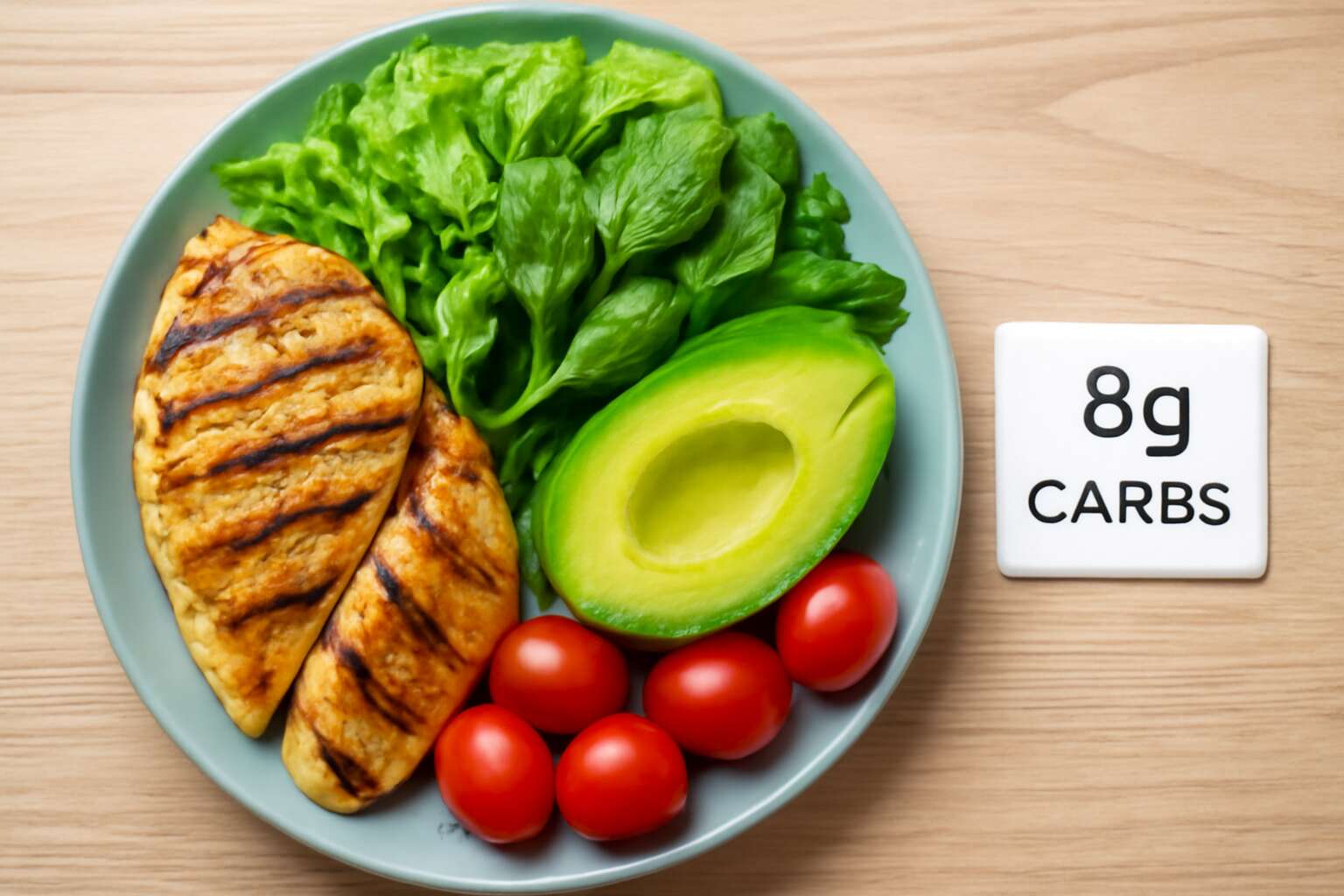
Defining low carb grams and daily targets
What counts as grams in a low carb plan
Carb math gets real fast. If you’re asking ‘low carb is how many grams?’, the answer isn’t one-size-fits-all. It depends on metabolism, activity, and goals. In South Africa, carbs often come from pap and maize, so gram counts become the map that keeps the plan steady. I track those grams to see the day’s reach!
Daily targets vary by how strictly you want to cut, and the numbers below frame it:
- Very low: 20–50 g net carbs per day
- Moderate: 50–100 g net carbs per day
- Liberal: 100–150 g net carbs per day
What counts as grams in a low carb plan? The bulk comes from non-starchy vegetables, dairy, and protein sources; fibre often offsets or reduces the impact of total carbs depending on the approach.
Typical gram ranges for low carb diets
In the quiet hours, numbers become sentinels. The inquiry “low carb is how many grams” flickers like a candle at a crypt door, demanding precision. In South Africa, pap and maize still echo from the pantry, and gram counts map the night’s routine.
Daily targets drift along a threefold path. Here is a quick reference:
- Very low: 20–50 g net carbs per day
- Moderate: 50–100 g net carbs per day
- Liberal: 100–150 g net carbs per day
Net carbs and the body’s quiet negotiation shape what those grams do on the plate; the aim isn’t punishment but balance, a nocturne of energy and appetite.
Grams become a map, guiding meals through the gray suburbs and city markets alike, turning every plate into a nighted ledger of intention!
Net carbs versus total carbs in grams
That quiet question—“low carb is how many grams”—cuts through the pantry like a blade of certainty. In South Africa, pap and maize still sit at the table, and numbers become a language of balance rather than restraint.
Net carbs versus total carbs is the distinction that changes the plate. Total carbs count every carbohydrate; net carbs subtract fiber, and sometimes subtract sugar alcohols. A practical rule: net carbs equal total minus fiber. If a product lists 20 g carbs and 5 g fiber, you’re looking at roughly 15 g net carbs.
- Very low: 20–50 g net carbs per day
- Moderate: 50–100 g net carbs per day
- Liberal: 100–150 g net carbs per day
Choosing a starting gram target based on lifestyle
In South Africa, the dinner table often wrestles with tradition and change, and the question “low carb is how many grams” lands at the center like a quiet drumbeat. Numbers become a language of balance rather than restraint, a pulse you feel in the kitchen light.
Defining grams is less about a fixed number than a living agreement with daily rhythm. Choose a starting target that respects activity, sleep, and appetite, and let fibre guide the pace.
- Lifestyle-driven framing keeps choices humane and sustainable
- Consistency over perfection helps the plan stay readable at the table
When pap sits beside lean proteins and vegetables, the grams are less a cage and more a compass, directing meals with nuance rather than severity.
Daily gram targets across different dietary styles
Low carb versus ketogenic gram targets
Carbs, that polite punctuation on a plate, often decide whether a meal reads brisk or indulgent. In South African kitchens, the question persists: low carb is how many grams, really. The answer isn’t a single number, but a spectrum shaped by activity, goals, and lifestyle.
- Low carb is how many grams: roughly 50–100 g of total carbs per day (fiber counted separately)
- Ketogenic: typically 20–50 g of total carbs per day (net carbs considered by some)
- Moderate low-carb: about 100–150 g per day
Across dietary styles, daily gram targets shape the conversation. Ketogenic approaches lean toward stricter boundaries, while broader low carb plans allow more latitude. The following targets crystallize the contrast:
These targets don’t dictate deprivation; they map a rhythm into meals that respect social occasions and local staples. The language of grams is a polite negotiation between appetite and nutrition, with the plate always telling a story!
Moderate low carb gram ranges for maintenance
In the quiet of a South African kitchen, grams become the language of balance. Many readers ask: low carb is how many grams, to keep meals brisk yet nourishing. The answer isn’t a single number but a spectrum shaped by activity and lifestyle.
For moderate low-carb maintenance, most people hover around 100–150 g per day. Here’s a practical day-in-the-plate glimpse:
- Breakfast: 20–40 g
- Lunch: 30–60 g
- Dinner: 40–50 g
That rhythm respects social occasions and local staples, letting the plate tell a story!
Adjusting grams for exercise and activity levels
In South Africa, energy-conscious kitchens hum with a new rhythm: meals planned by energy, not just calories. 62% of South Africans now plan meals around energy to power their days. “Your plate is a map of energy,” a local nutritionist says. So, the question is: low carb is how many grams — it shifts with daily momentum and mood.
Daily gram targets across different dietary styles lean on pace and preference, not a single decree. Here are the targets most SA kitchens track:
- Low-carb style: about 60–100 g per day
- Moderate: about 100–150 g
- Flexible: up to 200 g
In practice, activity levels pull the numbers up or down. On rest days, the plate leans toward the lower end; on active days, the plate welcomes a touch more energy to power the afternoon.
South African kitchens know the rhythm is personal—each plate a small sun rising over the stove, a quiet talisman of balance!
Guidelines for beginners to establish target grams
South Africa’s kitchens run on energy, not just calories. 62% of South Africans plan meals around energy to power their days, and “Your plate is a map of energy,” says a local nutritionist. So, low carb is how many grams—this question shifts with momentum and mood, inviting a personal calibration.
- Low-carb style: anchor meals with protein and fats, then add greens.
- Moderate style: balance carbs with whole foods for steady energy.
- Flexible style: mirror carbs to the day’s pace—more on active days, less on rest.
The rhythm is a personal conversation, a subtle art of balance that reframes nourishment as a daily reflection rather than a strict rule.
Calculating grams from foods and meals
Reading nutrition labels for carb grams
Crafting a practical low-carb plan hinges on grams, not guesses. In South Africa, the question ‘low carb is how many grams’ often guides kitchen choices and grocery runs, turning labels into clues and meals into calculated moves.
Calculating grams from foods and meals starts with the label and a quick headcount of portions. Weigh or measure, note the carbohydrate per serving, and multiply by your actual portion.
- Check the stated serving size
- Record total carbohydrate per serving
- Subtract fibre for net carbs
- Multiply by your portion to get meal grams
Reading nutrition labels for carb grams becomes a skill of pattern recognition rather than a chore. Look for serving size, compare brands, and watch for hidden carbs in sauces and processed snacks; the net effect on your daily total matters more than a single label. It’s almost detective work!
Estimating grams from whole foods without labels
Calculating grams from foods and meals is a quiet conversation with the plate. In South Africa, the question “low carb is how many grams” becomes a compass guiding kitchen choices and grocery runs. When you view carbs as a language of portions and densities, labels start to reveal their subtle truths.
Estimating grams from whole foods without labels invites a patient, intuitive map. Rely on familiar densities and common measures—cups, fists, or handfuls—to translate ordinary portions into rough numbers. Anchors like these keep intuition honest:
- Common portion references (cups, pieces, handfuls) as rough yardsticks
- Approximate carb density per 100 g for familiar foods
- Cooking changes and shrinkage considered as a gentle adjustment
With time, the estimation becomes second nature, turning casual meals into mindful expressions of a personal low-carb rhythm.
Tools and apps to track grams accurately
In a South African kitchen, the math of meals matters more than the mood of the plate. The question “low carb is how many grams” pops up at every shop, especially when labels are shy.
Tools and apps turn rough estimates into trackable data. They pull carb counts from global databases and let you tailor targets to your lifestyle.
Key features include:
- Barcode scanning speeds logging
- Custom recipes and adjustable portions
- Offline logging plus cloud sync
- Local food entries and database flexibility
For South Africans, Cronometer, MyFitnessPal, and FatSecret offer reliable bases; you map familiar foods and track carbs, net carbs, or total grams with confidence.
Set your grams, watch trends, and let the app whisper the truth when a braai threatens to derail the plan.
Common foods and their approximate gram counts
South Africa’s kitchens hum with braai smoke and precise scales. The grams on the label become the quiet scorekeeper, especially when labels hide their numbers. When you hear the question “low carb is how many grams,” the answer isn’t universal—it hinges on your targets, your meals, and your appetite for precision.
Here are common foods and their approximate carb grams per standard serving:
- Chicken breast, 100 g: about 0 g carbs
- Tomato, 1 medium (123 g): about 5 g carbs
- Broccoli, 100 g: about 7 g carbs
- Carrot, 1 medium (61 g): about 6 g carbs
- Bread slice, 30 g: about 13 g carbs
With these rough maps in hand, you chart plates that honor both tradition and restraint, letting the math keep pace with the mood.
Difference between total carbs and net carbs in practice
South Africa’s kitchen scales hum after a braai, counting every gram. When you hear the question “low carb is how many grams,” the answer isn’t universal—it depends on targets and how precise you want to be.
Calculating grams from foods and meals begins with the simple split between total carbs and net carbs. Total carbs are all carbohydrate grams on the label; net carbs subtract dietary fiber and, where applicable, sugar alcohols.
- Total carbs are all carbohydrate grams listed on nutrition labels.
- Net carbs subtract fiber and certain sugar alcohols from total carbs.
- Individual tolerance and meal composition affect how net carbs feel in real life.
With that clarity, plates become a quiet collaboration of memory and measurement, where everyday cooking and sharing carry the rhythm of counting grams.
Meal planning and meal prep by gram targets
Portioning meals to hit daily gram goals
In the quiet ritual of a South African kitchen, I measure the day in grams, not guesses. A haunting statistic lingers on the tongue: more than half of home cooks miscount daily carbs, and the plate bears the debt. For clarity, meal planning by gram targets becomes a lantern in the dark, turning appetite into numbers and cravings into measured portions.
When confronted with the question, “low carb is how many grams?”, the answer begins with a baseline: decide your total daily gram budget and divide it into meals with precision.
- Breakfast: 15–25 g net carbs with 25–30 g protein.
- Lunch: 20–35 g net carbs with 30–40 g protein.
- Dinner: 10–25 g net carbs with 25–45 g protein.
With a kitchen scale, portions become poetry. By chipping away at the excess one gram at a time, you hit daily gram goals without surrendering flavor.
Smart swaps to reduce carb grams
Governing a week of meals with gram targets feels like a quiet political act in a South African kitchen. More than half of home cooks miscount daily carbs, and the plate pays the bill. When someone asks, ‘low carb is how many grams?’, the answer is a daily budget you divide across meals, not guesses.
- Cauliflower rice instead of white rice
- Leafy lettuce wraps instead of bread for sandwiches
- Zucchini noodles (zoodles) or shirataki instead of traditional pasta
- Full-fat yogurt with berries or nuts instead of sugary snacks
With a kitchen scale, portions become poetry and meal planning by gram targets keeps appetite aligned with the numbers; low carb is how many grams becomes practical truth rather than guesswork.
Snack planning within gram limits
In a kitchen tuned to grams, meals become poetry and the question ‘low carb is how many grams’ reveals its weather—the daily budget that guides every plate. Numbers whisper certainty amid cravings, turning temptation into balance across South African tables and bright fruit counters.
Meal planning and meal prep by gram targets keeps momentum steady; consider these natural-fit targets:
- Breakfast plates 180–220 g, with protein and fat in quiet balance
- Lunch wraps using lettuce or cucumber as vessels, 120–150 g of carbs max
- Snacks kept to 80–120 g, such as yogurt with berries or a small handful of nuts
Snack planning within gram limits turns impulse into intent, and the question of grams to target is answered by rhythm rather than guesswork.
Sample daily meal plan examples by grams
Across South African kitchens, one humble unit governs fate on the plate—the gram. When readers ask ‘low carb is how many grams’, the answer becomes a daily budget they can actually live by, a compass that steadies cravings and choreographs energy. Numbers translate appetite into a poetic rhythm that suits everyday life.
- Breakfast: 180–220 g total; protein plus healthy fats support a calm, energized morning.
- Lunch: 120–150 g carbs max; lettuce wraps or cucumber vessels keep midday meals light and satisfying.
- Snack: 80–120 g; yogurt with berries or a small handful of nuts steady the afternoon.
These gram targets smooth the day into a steady, delicious arc rather than a tug-of-war with cravings.
Troubleshooting grams and debunking myths
Is total grams or net grams more important?
Shadows pool in the kitchen as I map the quiet currency of grams. Troubleshooting grams feels like tuning a piano of cravings—some insist every crumb must bend to a fixed tally; others whisper that intention matters more than precision. For many readers, the question low carb is how many grams becomes a compass in a fog of labels and nutrition claims.
- Myth: total grams at every bite are the only truth; truth: net carbs and portions shift as plans unfold.
- Myth: you must hit a single gram target; truth: consistency over the day matters more than perfect punctuality.
- Myth: all foods count the same; truth: fibre, sugar alcohols, and serving size change the practical impact.
Ultimately, is total grams or net grams more important in SA kitchens? The answer rests in goals and labels you trust; there is a difference between counting down to the last unit and counting your overall pattern.
Common misconceptions about low carb grams claims
Troubleshooting grams in the kitchen feels like tweaking a braai grill: smoky, stubborn, and oddly mathematical. That question—low carb is how many grams—keeps popping up as readers juggle labels. I’ve watched pantries tilt toward temptation while craving balance and fibre.
- Myth: total grams at every bite are the only truth; truth: net carbs and portions shift as plans unfold.
- Myth: you must hit a single gram target; truth: consistency over the day matters more than perfect punctuality.
- Myth: all foods count the same; truth: fibre, sugar alcohols, and serving size change the practical impact.
Truth stays practical: net carbs and portion sizes recalibrate impact; fibre and sugar alcohols matter, and consistency over the day beats chasing a perfect moment.
Ultimately, the answer rests in goals and labels you trust; there’s a difference between counting the last unit and counting your overall pattern.
Handling social events and high gram temptations
Social events test your pantry discipline. Troubleshooting grams on the fly becomes a practical skill, not a sacrifice. low carb is how many grams isn’t a single number—it’s a balance of net carbs, fibre, and portions that travel with your day.
Myth-busting at the buffet table keeps expectations realistic. You don’t chase a perfect gram; you steer your day with steady choices and crowd-pleasing swaps.
- Fill half your plate with non-starchy veg and protein to anchor grams.
- Choose sugar-free drinks or water, and skim high-sugar sauces.
- Pause before seconds and reassess your portion before finishing.
Plan a couple of flexible targets for events; a little structure travels well and keeps cravings in check.
When to reassess grams and consult a professional
That nagging question “low carb is how many grams” often flashes across dinner tables and timelines. There isn’t a single number; it’s a balance between net carbs, fibre, and portions that travel with your day. Debunk the myth of a perfect gram; instead, troubleshoot grams by listening to appetite, energy, and mood as the day unfolds. It’s a flexible idea, not a punishment, shaped by context and cues from the body.
When to reassess grams and consult a professional? If cravings spike, energy dips inconsistent with routine, or medical conditions demand nuance, it’s wise to seek guidance from a registered dietitian or clinician. A South African practitioner can translate general ideas into a plan that respects local foods, lifestyle, and goals. Reassessment is a sign of care, not failure.




0 Comments